Choosing the right heater for an RV requires balancing size, power source, safety, and installation. The table below summarizes seven compact and RV-relevant heaters included in this guide so you can compare form factor and primary features at a glance.
| Product | Type | Power / Output | Best For |
|---|---|---|---|
| Dreo Space Heater (2025 Upgraded) | Portable Electric Ceramic | 1500W | Quick portable heat, thermostat control |
| Dreo 25″ Portable Heater | Tower Ceramic | 1500W (high) | Larger RV interiors, quiet operation |
| GiveBest Portable Heater | Ceramic Fan Heater | 1500W / 750W | Small zones, adjustable wattage |
| Caframo True North Heater | Low Profile Electric | Multiple settings | Under-cabinet or low-clearance spots |
| Xtreme Heaters Boat, Cabin & RV | Low-profile Portable | Electric (low watt design) | Installation against walls, carpeted floors |
| Mr. Heater Buddy MH9BXRV | Radiant Propane Heater | 4,000–9,000 BTU | Off-grid or propane-ready RVs |
| Suburban Wall Mount RV Heater | Built-in Wall Heater | Electric, variable | Permanent RV installation, slim profile |
Dreo Portable 1500W Ceramic Heater

This Dreo model is a 1500W PTC ceramic portable heater designed for indoor quick heat. The unit pairs an advanced PTC system with a heat funnel design that claims to push warm air farther and deliver heat within seconds.
Safety features include a tilt-detection sensor, V0 flame retardant materials, overheat protection, and a safety plug. The ETL certification indicates it meets applicable safety standards for indoor use.
Temperature control is handled via an enhanced NTC chipset that supports a wide range from 41–95°F in 1°F increments. The digital display, remote, and 12-hour timer make it practical for targeted zones in an RV without heating the whole coach.
Dreo Tower Quiet Room Heater

The Dreo 25″ tower-style heater offers fast airflow (reported at 11.5 ft/s) and an extended impeller to expand heat range, making it suited for larger RV living areas or open-floor layouts.
Noise suppression is a highlighted feature, with airflow design intended to reduce sound to as low as 25 dB, useful for sleeping or working in compact RV environments. Built-in protections include tip-over and overheat sensors and an optional child lock.
As a portable electric option, this tower needs a suitable 120V circuit and can provide even distribution without permanent installation. It is optimized for quiet, continuous operation in bedroom or living areas.
GiveBest Compact Ceramic Heater

The GiveBest portable heater is a 2-in-1 heater and fan unit with selectable heat levels of 1500W or 750W and a cool air fan mode for summer use. The adjustable thermostat cycles the heater to maintain a preset temperature.
Safety is reinforced with flame retardant materials, automatic safety shutoff for overheating, and tip-over protection that re-engages when uprighted. A built-in carry handle supports portability within an RV.
This heater is targeted at small zones up to about 200 sq ft. Dual-watt settings allow reduced power draw on limited electrical circuits, which can be important for smaller RV shore power or generator capacity.
Caframo True North Low Profile Heater

The Caframo True North is a rugged, low-profile electric heater with an adjustable thermostat and five settings, offering steady heat through a durable steel housing. Its compact footprint fits low-clearance areas often found in RVs.
An anti-freeze mode triggers automatically at around 38°F to prevent freezing during storage or winterization. Multiple heat and fan settings provide climate control flexibility without requiring permanent installation.
Solid construction and a small profile make the True North suited for placement under cabinets or in confined spaces. It emphasizes continuous circulation and a range of user-selectable output levels.
Xtreme Heaters Boat, Cabin & RV Heater

Xtreme Heaters markets a portable design specifically for boats, cabins, and RVs. The heater draws air from the top so it can sit against walls or on carpet without restricting intake, a useful feature in small, furnished RV interiors.
The low-profile base and stated tip-over switch provide an extra safety layer. Quiet operation and a stable footprint are designed to reduce interference with interior layout and to allow placement in tighter areas.
This heater is presented as a versatile, space-conscious option that prioritizes placement flexibility and basic safety features for recreational vehicles and similar small spaces.
Mr. Heater Buddy MH9BXRV Radiant Heater
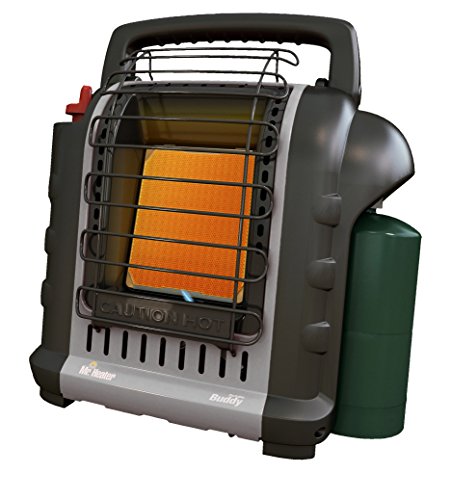
The Mr. Heater Buddy MH9BXRV is a radiant propane heater rated from 4,000 to 9,000 BTU, suitable for spaces up to around 225 sq ft. It is approved for indoor/outdoor use when used with proper ventilation as specified by the manufacturer.
Safety systems include auto shut-off if tipped over, if the pilot light goes out, or if low oxygen levels are detected. The unit is nearly 100% efficient in radiant heat delivery and is intended for quick warm-up where propane is available.
Because it uses propane rather than electric power, this option is relevant for off-grid RVing or when shore power is limited. Attention to ventilation and carbon monoxide considerations is necessary for indoor use in an RV.
Suburban Wall Mount RV Electric Heater

The Suburban wall-mounted unit is designed for permanent RV installation with a slim profile (less than 5 inches thick) to minimize intrusion into living space. It offers an adjustable thermostat and variable heat settings.
A single-speed internal fan provides gentle air distribution and the slim, ergonomic design suits discrete placement in hallways or under cabinets. The heater is intended to integrate with RV interiors rather than sit as a portable unit.
Installation requires mounting and electrical connections; this option is for owners seeking a built-in system rather than portable plug-in heaters.
Buying Guide: How to Choose an RV Heater
Heat Source: Electric vs. Propane
Electric heaters (ceramic, PTC, radiant electric elements) are simple to use on shore power, offer low maintenance, and include multiple safety cutoffs. They require adequate 120V power capacity and may demand reduced settings on limited shore power or generators.
Propane radiant heaters provide high BTU output without relying on shore power, making them useful for off-grid RVing. Propane units require strict adherence to ventilation, clearance, and CO/oxygen safety protocols and often include automatic shutoff features for tipping or low oxygen.
Power, Coverage, and RV Size
- Wattage/BTU: Small electric units are typically 750–1500W and suit single zones or small RVs. A 1500W heater can warm a modest area quickly but may not keep an entire large coach warm on its own.
- BTU output: Propane heaters are rated in BTUs (e.g., 4,000–9,000 BTU) and are more appropriate for larger interior volumes or off-grid situations.
- Coverage estimates: Manufacturers often list square footage; use those as starting points and factor in insulation, ceiling height, and outdoor temperature.
Installation and Portability
Portable plug-in heaters are easy to move, allow targeted warming, and require no installation. They are useful when occupants want to heat a single zone and save energy.
Wall-mounted or built-in heaters require installation but save floor space and can provide more permanent distribution. Consider clearance, mounting options, and compatibility with RV electrical systems.
Safety Features to Prioritize
- Tip-over protection: Essential if the heater might be bumped or placed on uneven surfaces.
- Overheat shutoff: Protects against internal component overheating.
- Flame-retardant materials and certifications: ETL or similar third-party certifications indicate compliance with safety standards.
- CO/oxygen sensors (for propane): Propane heaters must have low-oxygen shutoff sensors and be used with CO detectors in the RV.
Electric System Considerations
Check the RV’s electrical capacity: a single 1500W heater draws roughly 12.5 amps at 120V. Running multiple high-wattage devices or the air conditioner concurrently can overload shore power or onboard inverter limits.
For limited electrical systems, choose dual-wattage heaters (e.g., 750W/1500W) or units with ECO modes to reduce draw. When using generators or inverters, ensure continuous load capability matches the heater’s requirements.
Noise, Airflow, and Comfort
Some units emphasize quiet operation (tower designs or low-speed fans) which benefits sleeping and working. Fan-forced heaters distribute warm air quickly, while radiant heaters warm objects and people directly without fan noise.
Consider units with programmable thermostats or timers to maintain comfort while conserving energy. Precise temperature control reduces short cycling and improves perceived comfort.
Size, Placement, and Clearance
Measure intended placement and verify clearance requirements. Low-profile or wall-mounted units are useful in tight spaces, while tower heaters require floor space and stable placement. Avoid blocking intakes or outlets with furniture or curtains.
Durability and Moisture
RVs encounter vibration and changing humidity. Choose heaters with robust housings and stable feet if the unit will be moved frequently. Electric heaters are generally not recommended for very high-moisture areas unless explicitly rated for such use.
Energy Efficiency and Operating Cost
Electric heaters convert nearly all input power to heat at the point of use, but operating cost depends on local electricity rates and power draw. Propane heaters’ cost depends on fuel prices and conversion efficiency.
For energy-conscious users, focus on targeted heating (zone heating) and thermostatic controls to avoid heating unused spaces.
Comparing Product Types for Common RV Scenarios
- Short trips with shore power: Portable 1500W ceramic heaters provide quick warmth and precise temperature control.
- Full-time RV living in cold climates: Consider a built-in wall heater combined with supplemental portable units for targeted areas.
- Boondocking/off-grid: Propane radiant heaters are attractive due to independence from shore power but require ventilation and CO monitoring.
- Small bunkhouses or bathrooms: Low-profile or mounted units fit better and reduce trip hazards.
Maintenance and Safety Practices
- Keep intakes and outlets clear of dust, bedding, and clothing.
- Use CO and smoke detectors when using combustion heaters inside the RV.
- Follow manufacturer instructions for placement, ventilation, and electrical connections.
- Store portable heaters securely during travel to prevent damage.