Choosing the right deck heater can extend your outdoor season and improve comfort on patios, porches, and decks. The table below summarizes seven top-rated options selected for varying fuel types, output, and use cases to help identify which unit suits your space.
| Product | Type / Output | Best For |
|---|---|---|
| DR Infrared Carbon Infrared Heater | Electric Infrared, 900–1500W | Covered patios, decks, garages |
| EAST OAK 50,000 BTU Patio Heater | Propane, 48,000–50,000 BTU | Large outdoor areas, commercial use |
| Cuisinart Portable Tabletop Patio Heater | Propane, 11,000 BTU | Small tables, camping, tailgates |
| Encyclpo 1500W Infrared Tower Heater | Electric Infrared, 1500W | Portable patio or garage use |
| SereneLife 1500W Infrared Patio Heater | Electric Infrared, 1500W | Weather-resistant outdoor setups |
| Thermo Tiki Outdoor Propane Heater | Propane, ~38,000 BTU | Porches, decks, commercial patios |
| Avenlur Pyramid Patio Heater | Propane, 48,000 BTU | Ambiance + heating for mid to large spaces |
DR Infrared Carbon Infrared Outdoor Heater
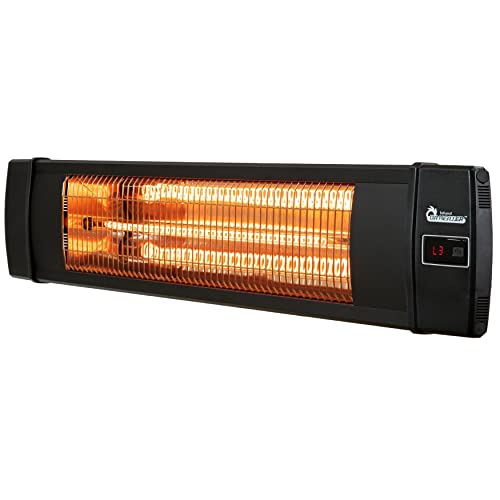
The DR. INFRARED HEATER DR-238 is an IP55-rated unit designed for both indoor and outdoor use. It uses carbon infrared technology to provide clean, instant, and odorless heat across three power settings: 900W, 1200W, and 1500W. The heater operates on standard 120V power and includes a remote control for convenience.
Its IP55 rating indicates protection against dust and water jets, making it suitable for covered patios and open-air restaurant settings where occasional exposure can occur. The infrared heating method transfers warmth directly to objects and people rather than heating ambient air, which can improve perceived comfort on breezy nights.
EAST OAK 50,000 BTU Patio Heater
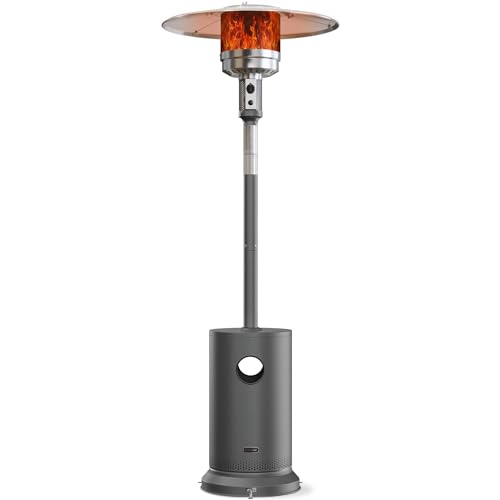
The EAST OAK freestanding patio heater delivers powerful output, advertised around 48,000–50,000 BTU, designed to cover an approximate 18-foot diameter. It targets large decks or commercial outdoor areas where high radiant output is required to heat multiple seating zones.
Construction uses 304 stainless steel double-layer heating mesh to improve durability and service life versus single-mesh designs. The unit is ETL certified for safety and includes wheels for mobility. Assembly is simplified with partially preassembled parts and a three-piece reflector shield.
Cuisinart Portable Tabletop Patio Heater
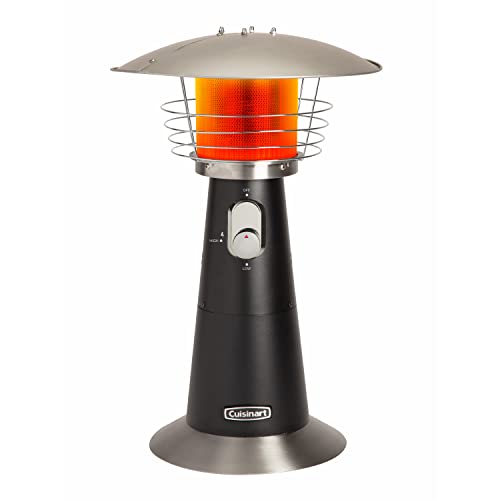
The Cuisinart tabletop heater runs on propane and produces 11,000 BTU for heating areas up to about 30 square feet. Its compact, lightweight form factor makes it suitable for table-side warmth, camping, and small outdoor gatherings.
Safety features include an anti-tilt automatic shut-off and a burner screen guard to reduce direct flame exposure. The reflector top plate distributes heat evenly. Its portable nature enables placement on tables to directly warm seated users rather than attempting to heat an entire deck area.
Encyclpo 1500W Infrared Tower Heater

The Encyclpo tower heater uses two carbon fiber heating elements and delivers 1500W of infrared heat, claiming 1-second fast heating to provide immediate warmth. It features three power levels and protective functions like tip-over and overheat protection.
With an IPX5 waterproof rating, the unit is positioned for indoor or outdoor use, including garages, balconies, and covered patios. The manufacturer highlights quiet operation without forced-air noise, and the tower design offers a focused vertical heat pattern suitable for standing or seated zones.
SereneLife 1500W Infrared Patio Heater

The SereneLife electric patio heater offers 1500W of infrared heating with two heat levels and a remote control. Its ETL certification and carbon fiber elements support energy-efficient operation with an 88% efficiency claim noted by the manufacturer.
Weather-resistance is specified with an IP24 rating and durable construction using an aluminum alloy frame and stainless steel base cover. This model is aimed at consumers who need a plug-and-play electric infrared solution for covered patios and decks with occasional exposure to moisture.
Thermo Tiki Outdoor Propane Heater
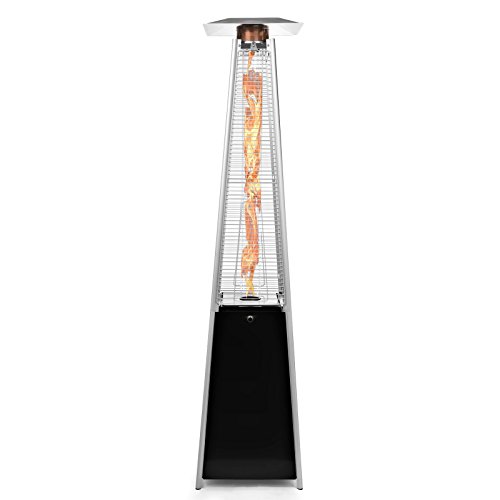
The Thermo Tiki commercial-style propane heater features a pyramid column with a visible dancing flame in a protected glass or column, producing a true-rated output near 38,000 BTU. It is built from high-grade steel and aluminum with corrosion-resistant finishes for extended outdoor use.
Safety components include a built-in tilt/shutoff valve, protective mesh around the heating column, and a pilot light. The unit is compliant with ANSI, CE, and CSA standards, suitable for porches, decks, and commercial patios where both heat and flame ambiance are desired.
Avenlur 48,000 BTU Pyramid Patio Heater
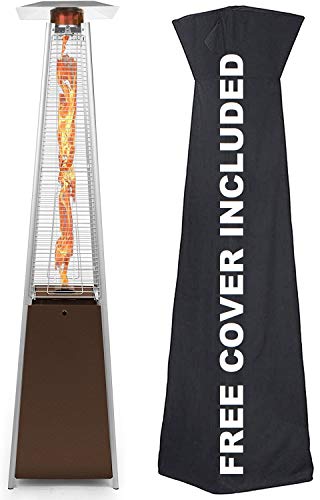
The Avenlur pyramid-style heater outputs 48,000 BTU and uses a quartz glass tube to showcase a visible flame, combining warmth with visual ambiance. The heater is marketed to cover up to roughly 200 square feet, depending on layout and exposure.
Included accessories such as a weatherproof cover and wheels for portability are notable for seasonal storage and repositioning. The pyramid design concentrates radiant heat outward and upward, making it effective for central placement on a deck or patio.
Buying Guide
Heating Type: Infrared vs. Propane
Infrared heaters (electric carbon or quartz) transfer radiant heat directly to objects and people, typically providing instant perceived warmth with minimal ambient air heating. They are ideal for covered decks and areas where electricity is available and where quiet, odorless operation is preferred.
Propane heaters generate higher total BTU output and can heat larger, more exposed areas without requiring electrical wiring. They provide strong radiant heat and often a visual flame for ambiance, but they require fuel storage and adherence to ventilation and safety rules.
Power, Output, and Coverage
Evaluate output metrics appropriate to your space: watts for electric heaters (e.g., 1500W units) and BTUs for gas heaters (e.g., 38,000–48,000 BTU). Higher BTUs or watts do not guarantee uniform coverage; layout, wind, and seating arrangement heavily influence effective warmth.
Manufacturers often provide an estimated heated area. Use these estimates conservatively for open-air setups; wind and open sightlines can reduce effective range. For targeted warmth, place heaters close to seating rather than relying on a single unit to heat a large, exposed deck.
Weather Resistance and Placement
Check the ingress protection (IP) rating for electric heaters intended for outdoor use. Ratings such as IP24, IP55, or IPX5 indicate different levels of protection from splashing water, jets, and dust intrusion. For unprotected or fully exposed installations, choose units specifically rated for those conditions or use protective enclosures.
Propane heaters should be used outdoors or in well-ventilated covered areas per manufacturer instructions. Position units on hard, level surfaces away from combustible materials and clearances specified in the manual.
Safety Features
Important safety components include tip-over shutoff, overheat protection, and automatic gas shutoff valves. Anti-tilt and flame guards reduce risk of accidental fires. ETL, CSA, or ANSI certification indicates compliance with recognized safety standards.
For tabletop propane models, anti-tilt sensors and burner guards are essential because these units are often used near seated users and flammable fabrics like tablecloths.
Portability, Installation, and Mounting
Consider mobility features like wheels, handles, and weight. Freestanding heaters with wheels offer repositioning flexibility, while mounted electric heaters provide a permanent solution for fixed canopies or pergolas.
Electric heaters typically require a protected electrical outlet or hardwired connection; check cord length and weatherproofing. Propane heaters need safe LPG cylinder placement and often require assembly and occasional maintenance of burners and valves.
Energy Efficiency and Operating Costs
Electric infrared heaters convert a large share of input power into radiant heat, often reported with efficiency percentages. Operating cost depends on local electricity rates and duty cycle. Propane units provide higher instantaneous heat for less upfront infrastructure but incur ongoing fuel costs.
Use timers, thermostats, or remote controls to limit run time and improve efficiency. Targeted zone heating (directing heat where occupants sit) is generally more cost-effective than attempting to warm an entire open deck.
Durability and Materials
Stainless steel, aluminum alloy, and corrosion-resistant finishes improve longevity in coastal or high-humidity environments. Double-layer heating meshes and protective screens can extend service life in gas units. Consider included warranties and availability of replacement parts.
Ambiance and Additional Features
Propane pyramid and tiki-style heaters add a visual flame that contributes to ambiance. Electric models offer quieter operation and remote controls. Choose based on whether visual flame ambiance or quiet, odorless warmth is a priority.
Other features to compare: remote control, adjustable heat levels, built-in thermostats, wheels and covers for storage, and accessory availability (mounting brackets, weather covers).
Comparing Use Cases
- Small table or camping: Low-BTU tabletop propane units provide personal warmth and portability.
- Covered patio or pergola: Electric infrared heaters with adequate IP rating offer clean, quiet operation and easy installation.
- Large or exposed deck: High-BTU propane freestanding heaters or multiple strategically placed infrared units are effective; consider wind patterns and seating layout.
- Commercial settings: ETL/CSA/ANSI-certified high-output propane units and durable stainless construction are suitable for continuous or heavy-duty use.
When selecting a deck heater, balance heat type, output, safety features, weather resistance, and installation constraints to match your outdoor layout and usage patterns. Review certification and follow manufacturer instructions for placement and operation to maximize safety and performance.