Quick overview: This guide reviews seven convection heaters suited to bedrooms, offices, large rooms, and utility spaces. The selection emphasizes energy efficiency, silent operation, mounting flexibility, and smart controls.
| Product | Brand | Best For |
|---|---|---|
| DeLonghi Convection Panel Heater | De’Longhi | Medium to large rooms, wall or floor mount |
| Leavesden Convection Space Heater | Leavesden | Quiet bedroom or office heating with multiple modes |
| Ballu Convection Panel Space Heater | Ballu | Smart control and rapid heat-up for living areas |
| AEGONAN Utility Pump House Heater | AEGONAN | Freeze protection for pump houses and utility rooms |
| Humcalo Graphene Convection Panel Heater | Humcalo | Fast infrared-convection hybrid heating with Wi‑Fi |
| Comfort Zone Convection Baseboard Heater | Comfort Zone | Portable baseboard-style heating for bedrooms/offices |
| EconoHome Convection Heater | EconoHome | Quiet, oxygen-friendly heating with dual power modes |
DeLonghi Convection Panel Heater

Design and power: The DeLonghi HCX9115E uses 1500 watts for rapid, whole-room convection heating. It is designed for medium to large rooms and supports both freestanding and wall-mounted installations with an included kit.
Energy and controls: The unit features an ECO PLUS function that automatically adjusts heat and power settings to save energy while maintaining comfort. The model emphasizes quick heat distribution and quiet operation suitable for bedrooms and living areas.
Leavesden Convection Space Heater
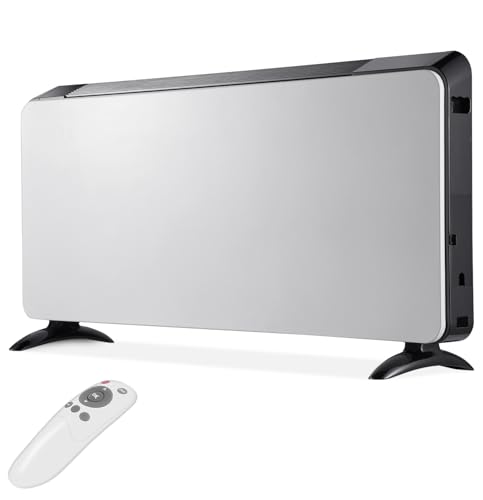
Heating technology and coverage: This panel heater uses an X-shaped aluminum fin design for fast heat distribution, advertised to cover spaces up to about 350 square feet. The convection approach spreads warmed air throughout the room.
Modes and noise: The unit offers Auto, Manual, Economy, and Comfort modes with an electronic temperature sensing system that aims to optimize efficiency. It emphasizes whisper-quiet operation, which is relevant for bedrooms and offices where noise matters.
Ballu Convection Panel Space Heater

Patented element and materials: Ballu uses a Hedgehog Heating Element made from aerospace-grade aluminum in an all-metal body, claiming high durability and fast performance. The design increases surface area for improved convection.
Controls and connectivity: This heater supports remote control, a digital panel, and a dedicated app, plus compatibility with voice control like Alexa. It advertises a rapid heat-up time and suitability as a primary heater for approximately 250 sq.ft. or supplementary support for larger spaces.
AEGONAN Utility Pump House Heater

Use case and design: The AEGONAN HPA600 is engineered for freeze protection in pump houses, utility rooms, and remote enclosures. It is intended to run reliably over long periods with no moving parts, reducing maintenance needs.
Controls and heat transfer: It includes a built-in thermostat with digital display and X-shaped aluminum fins to improve heat transfer by convection. Temperature range and simple set-up are highlighted for equipment protection scenarios rather than household comfort-focused features.
Humcalo Graphene Convection Panel Heater

Hybrid heating and speed: The Humcalo combines convection and far-infrared with graphene-enhanced aluminum heating elements, claiming rapid heat within 10 seconds and a wide 180° distribution pattern for uniform warmth.
Smart features and efficiency: The heater offers Wi‑Fi control (Tuya), a PID intelligent constant temperature algorithm, and an ECO mode that adapts power to room size, aiming to reduce energy consumption. Warranty coverage is listed to support reliability claims.
Comfort Zone 1500W Convection Baseboard Heater
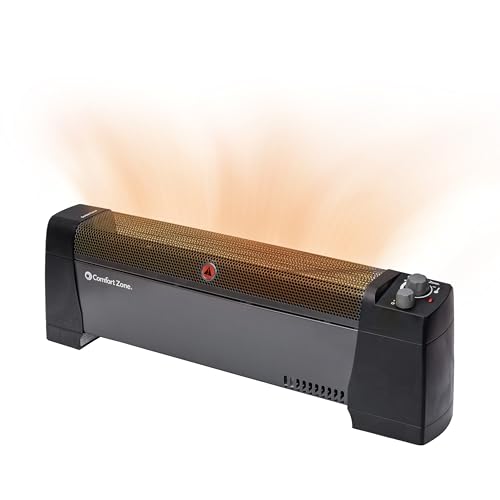
Form factor and output: This unit is a 1500W convection baseboard-style heater intended to provide consistent, even heat in medium-sized rooms. The plug-in design supports portability between spaces.
Safety and controls: It features an adjustable thermostat, two heat settings, tip-over shutoff, and an overheat protection sensor. ETL listing and a stay-cool body are highlighted for family-friendly installation and use.
EconoHome Convection Heater
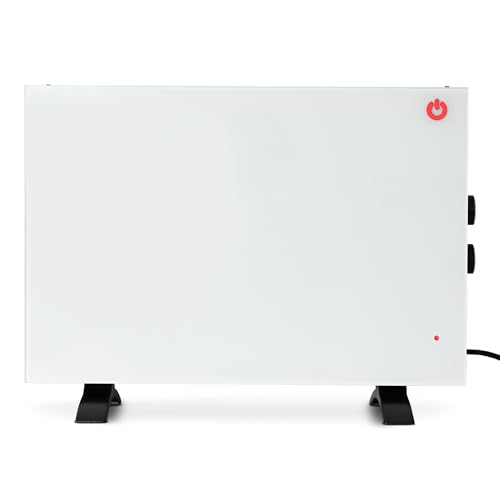
Air quality and settings: EconoHome advertises no dust emissions and oxygen-friendly operation, positioning the heater for users concerned about indoor air quality. It provides selectable 750W or 1500W power settings via a precision thermostat.
Safety features: The product includes a tip-over switch and thermal cut-out for automatic shutoff in unsafe conditions. Quiet operation and a user-friendly thermostat are emphasized for residential spaces.
Buying Guide
Heat output and room size: Convection heaters are commonly rated in watts. 1500W750W
Energy efficiency and modes: Look for ECO or economy modes, PID or intelligent algorithms, and adaptive thermostats that reduce cycling. Smart scheduling and auto temperature sensing help avoid wasted energy while maintaining comfort. Units that claim percentage energy savings should be evaluated against real-world usage patterns and heat loss in the space.
Convection vs infrared vs hybrid: Pure convection heaters warm air and rely on circulation; they provide even room warmth over time. Far-infrared models radiate heat to objects and people and can feel faster for localized warmth. Hybrid designs combine both approaches for rapid startup and sustained ambient heating. Choose based on whether fast direct warmth or uniform room temperature is the priority.
Mounting and placement options: Some models support freestanding and wall-mount installation for flexibility. Baseboard or freestanding units are easier to relocate. For permanent installation consider clearance requirements, mounting hardware, and whether the unit’s airflow pattern matches the room layout.
Controls and connectivity: Thermostatic control is core to comfort and efficiency. Digital panels, remote control, app connectivity, and voice integration add convenience and allow scheduling. For remote or unattended sites, a reliable digital thermostat and scheduling features reduce manual intervention.
Safety features: Prioritize units with tip-over protection, overheat cut-off, ETL/UL listing, and a cool-touch exterior where children or pets are present. Utility and pump-house heaters designed for freeze protection emphasize continuous operation and ruggedness; they may lack household conveniences but provide long-term reliability.
Noise and operation: Convection panel heaters are generally very quiet because they rely on natural or low-speed convection rather than fans. If the sleeping environment is a concern, seek models that advertise whisper-quiet operation and read specifications for fanless designs.
Materials and heat transfer: Aluminum fins and corrugated elements increase surface area for more efficient heat transfer and faster warm-up. All-metal housings enhance durability; advanced elements like graphene or patented fin designs aim to balance output and longevity. Verify manufacturer claims against warranties and independent reviews when available.
Application-specific factors: For bedrooms and offices, focus on quietness, accurate thermostats, and controllable timers. For large living areas, consider multiple units or hybrid models with rapid heat-up. For utility rooms and pump houses, prioritize continuous operation, freeze-protection thermostats, and minimal maintenance design.
Comparing features across models: – Units like DeLonghi and Comfort Zone emphasize classic convection performance and safety features for residential use. – Leavesden and EconoHome highlight quiet operation and multiple heat modes for comfort optimization. – Ballu and Humcalo add smart controls and faster warm-up with proprietary heating elements. – AEGONAN targets industrial/utility use with a focus on freeze protection and long-term operation.
Warranty and support: Longer warranties and manufacturer support are indicators of expected durability. If smart features are included, verify ongoing app compatibility and update policies. For remote installations, consider replacement parts availability and documented operating ranges.
Maintenance and longevity: Fanless convection units typically require less maintenance. Periodic exterior cleaning and ensuring unobstructed airflow are standard. For heaters with complex electronics or apps, plan for firmware updates and check for replaceable components where relevant.