The right heater keeps aquatic life healthy by maintaining a stable, appropriate temperature. This guide highlights reliable submersible heaters across tank sizes, from nano betta setups to large freshwater and saltwater systems. Below is a quick comparison of the seven featured models so you can match capacity and features at a glance.
| Product | Wattage | Recommended Tank Size |
|---|---|---|
| hygger Aquarium Heater (digital) | 300W | 40–80 gallons |
| HiTauing Upgraded 300W | 300W | 40–75 gallons |
| Orlushy Submersible 300W | 300W | 40–55 gallons |
| Tetra HT Submersible 100W | 100W | 10–30 gallons |
| HiTauing Multi-Watt Line | 50–500W (model dependent) | Small to large tanks |
| Orlushy 300W With External Controller | 300W | 40–60 gallons |
| hygger Mini 50W | 50W | 5–10 gallons |
hygger 300W Aquarium Heater With LED Controller

This 300W digital submersible heater is designed for medium-to-large tanks and includes a detachable LED controller that mounts outside the tank for convenient adjustments. The controller displays current and preset temperatures, working power, and warning indicators.
Key safety features include overheating and out-of-water protection. The unit automatically cuts power and sounds an alarm if the temperature exceeds 94°F or if water level falls below the sensor. Error codes (HH, LL, AUTO shut off) provide quick diagnostics.
Temperature range spans 59°F–93°F with ±1°F accuracy. The long cord and separate controller allow flexible placement, and the heater is rated for both freshwater and saltwater use. The length and wattage suit tanks roughly 40–80 gallons; select wattage per the manufacturer chart for larger setups.
HiTauing Upgraded 300W Explosion-Proof Heater

The HiTauing 300W model emphasizes construction and rapid heating. It uses a quartz glass tube with a black ABS protective shell to reduce visibility and scald risk. The manufacturer describes it as explosion-proof and shatter-resistant for enhanced safety.
Thermal design includes a nickel-chrome heating wire for fast, uniform heat transfer. The unit supports a temperature range of 63°F–94°F and is suitable for 40–75 gallon tanks. The long cord and standard two-pin plug provide basic convenience.
An intelligent sensor system stops heating if the heater head rises approximately 5 cm out of water or if it exceeds preset temperatures. Diagnostic cues include an “E1” code and indicator light behavior, which alert users to water-level or temperature faults.
Orlushy 300W Adjustable Submersible Heater
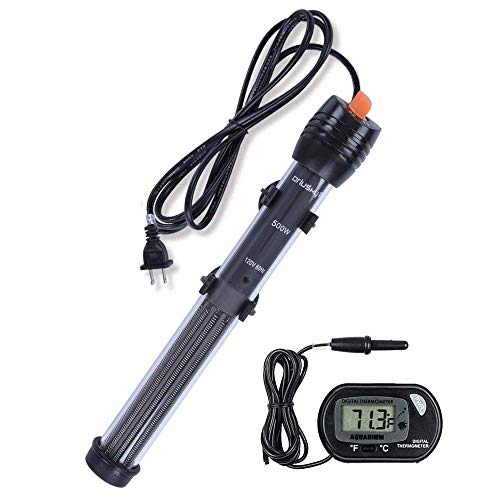
This 300W adjustable heater targets aquariums in the 40–55 gallon range and includes two suction cups plus a free thermometer. The heater uses a 2mm thickened quartz glass tube rated as explosion-proof for both fresh and saltwater.
Temperature adjustment is mechanical with a dial area; the seller notes it is not digitally precise but allows small interval tuning. The unit is compact and designed to be easily hidden within decor or rockwork.
Construction details emphasize simple, proven materials for durability. The length and power rating make it suitable for medium tanks where a submersible rod-style heater is preferred over external in-line or substrate heating options.
Tetra 100W Submersible Heater With Electronic Thermostat
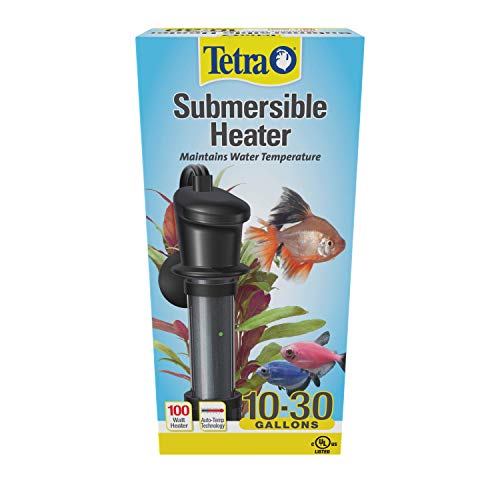
The Tetra 100W HT is an established option for small tanks (10–30 gallons). It features an electronic thermostat preset to 78°F and an indicator light system: red indicates active heating and green indicates standby.
This heater is fully submersible and intended for aquarists who prefer a simple, set-and-forget solution for small freshwater tanks. The electronic thermostat maintains a consistent temperature without a separate external controller.
As a compact option from a long-standing brand, it suits hobbyists prioritizing straightforward thermostatic control over advanced digital diagnostics or external mounting options. It is marketed for ease of use and reliable temperature maintenance.
HiTauing Multi-Watt Submersible Heater Series
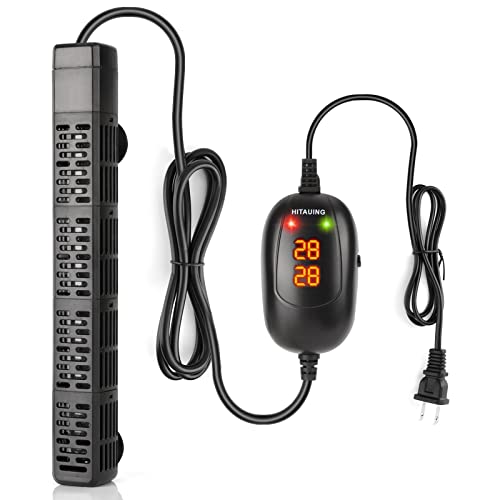
The HiTauing multi-watt lineup covers 50W through 500W, enabling matching heater capacity to tank volume from nano setups up to large aquariums. The listed 300W variant is suitable for 40–75 gallons and uses nickel-chromium heating wire.
Featured safety includes an intelligent water sensor that cuts power when the unit is out of water or when rapid overheating is detected. Users can toggle Fahrenheit and Celsius and rely on an LED indicator to show status.
Materials include explosion-proof quartz glass and an ABS shell for heat resistance. The combination of wattage options and safety features aims to provide flexibility across multiple tank sizes while reducing the risk of thermal damage to livestock.
Orlushy 300W With External Digital Controller

This Orlushy 300W heater is designed for 40–60 gallon tanks and adds an external digital controller for precise setpoint management and remote monitoring. The heater body uses gray quartz glass for improved hardness and explosion resistance.
The heater emphasizes rapid heating via nickel-chromium wire and an accurate external sensor system that updates temperature in real time. An auto-cut feature disables power if temperatures exceed 95°F and displays an error code to protect aquatic life.
Compact length (8.6 inches) reduces visual impact and allows flexible placement. The external display enables safer adjustments without reaching into the tank, and the manufacturer highlights compatibility with both freshwater and saltwater environments.
hygger Mini 50W Nano Heater For Small Tanks

The hygger Mini 50W is built for nano and betta tanks (5–10 gallons). Its small heating element occupies minimal space and includes an external digital controller allowing temperature selection from 59°F–93°F and real-time display.
Safety systems include low water level shutdown, overheat protection, and audible fault alerts. The product notes that residual heat may still affect the shell after shutdown, and users should address malfunctions promptly.
This compact heater serves small aquaria where gentle, stable heating and minimal equipment footprint are priorities. The external controller simplifies setpoint changes and monitoring for shallow or planted setups.
Buying Guide
Match Wattage To Tank Size
Selecting the correct wattage is a basic requirement. As a general rule, use approximately 3–5 watts per gallon for freshwater tanks to raise and maintain temperature. Larger tanks require proportionally more wattage, while small or heavily insulated tanks can sometimes use less.
Models in this guide cover a broad range: 50W for nano tanks, 100W for small tanks, and 300W for medium to large systems. For long tanks or high ambient loss, consider stepping up wattage or using multiple heaters for distribution.
Sensor Placement And External Controllers
Heaters with external controllers separate the user interface from the submerged element, allowing easier adjustments and monitoring without wet-hands interaction. External sensors can provide more accurate readings when placed in mid-water flow near the return current.
Integrated controllers are compact and simple but may require reaching into the tank to adjust. Consider the convenience of controller mounting and the risk of accidental disturbance of decor or livestock when choosing.
Safety Features: Overheat & Dry-Run Protection
Look for automatic shutoff if the heater is removed from water or if temperatures exceed safe thresholds. Error codes, indicator lights, and audible alarms provide prompt notification of faults.
Explosion-resistant quartz glass and ABS protective shells reduce the risk of breakage and scalding. For saltwater and reef tanks, corrosion-resistant components and sealed electronics are preferable.
Material And Durability
Quartz glass tubes are common for submersible rod heaters and are often labeled explosion-proof, though care is still required. Nickel-chromium heating elements are typical for rapid, even heating.
Protective ABS shells and thicker glass add durability. For very small or shallow tanks, compact designs reduce obstruction. For larger tanks, longer rods and robust build quality improve longevity.
Temperature Accuracy And Range
Precision matters for sensitive species. Digital controllers typically offer tighter control and clear readouts. Verify the temperature range and stated accuracy—models here provide ranges typically between 59°F and 95°F with accuracies around ±1°F on digital units.
If maintaining a narrow range (e.g., for tropical fish or certain invertebrates), prefer heaters with external digital control and real-time temperature display.
Redundancy And Distribution
In larger aquariums, using two heaters of lower wattage each can improve redundancy and even heat distribution. Placing heaters at opposite ends or near circulation points helps minimize hotspots and cold zones.
Redundancy is also a safety strategy: if one heater fails, the other may maintain a survivable temperature while you replace or repair the failed unit.
Saltwater Versus Freshwater Considerations
Saltwater environments are more corrosive. Choose heaters with sealed electronics, corrosion-resistant materials, and manufacturer guidance for marine use. Quartz glass and ABS casings are commonly used across both environments but verify marine suitability in the product description.
For reef tanks, consider integration with chiller systems and the potential need for narrower temperature control to avoid stressing coral and invertebrates.
Installation And Maintenance
Proper placement is crucial: mount the heater near a circulation source to promote uniform temperature. Use suction cups or mounting brackets to secure the element and avoid contact with substrate or decor that could trap heat.
Routine maintenance includes visual inspection for cracks, monitoring of temperature stability, and testing the heater after any power outage. Replace aging units before performance degrades significantly.
Monitoring And Complementary Equipment
Pairing a reliable heater with an independent aquarium thermometer or a controller with alarm outputs improves safety. Smart aquarium controllers can log temperature trends and trigger alerts for deviations.
For sensitive setups, consider a separate backup power plan, surge protectors, and placement of heaters with clear indicator lights visible from the monitoring location.