When the grid goes down, choosing the right heater matters for safety, runtime, and warmth. Below is a quick summary table of seven indoor-capable heaters that are commonly considered for emergency heating during power outages. The table highlights fuel or power source and typical coverage to help narrow choices quickly.
| Product | Fuel / Power | Approx. Coverage |
|---|---|---|
| Mr. Heater Portable Buddy MH9BX | Propane (cylinders) | Up to 225 sq. ft. |
| VESTA Self-Powered Heater & Stove | Canned heat (no electricity) | Up to 200 sq. ft. |
| Mr. Heater Blue Flame Vent Free 20,000 BTU | Propane (wall/installed) | Up to 700 sq. ft. |
| Paayox 30000 BTU Tank-Top Heater | Propane (20 lb tank) | Large spaces / garages |
| Dreo Oil Filled Radiator 1500W | Electric (requires power/generator) | Medium rooms |
| Dreo 1500W Ceramic Space Heater | Electric (requires power/generator) | ~200 sq. ft. |
| Dr Infrared 1500W Portable Heater | Electric (requires power/generator) | Large rooms |
Mr. Heater Portable Buddy MH9BX
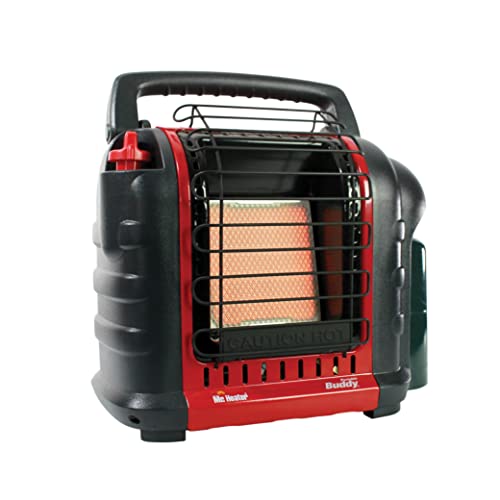
Type and fuel: Portable LP (propane) radiant heater using disposable cylinders. Heating output: Adjustable 4,000–9,000 BTU for spaces up to about 225 sq. ft.
The unit uses infrared/radiant heat to warm people and objects directly instead of only the air, which is efficient in short-term emergency scenarios. It includes a Piezo igniter for matchless startup and an improved tip-over safety switch that audibly engages if the heater is tipped or jarred. The heater is marketed as indoor-safe for well-ventilated spaces, but users should pair it with a carbon monoxide detector and follow all label ventilation guidance.
VESTA Self-Powered Indoor/Outdoor Heater & Stove

Type and fuel: Compact off-grid unit using canned heat (sterno-style fuel). Heating and cooking: Designed as a combined stove and space heater capable of warming about 200 sq. ft. and cooking small meals.
The VESTA is promoted as safe for indoor use when operated per instructions, providing a no-electricity option during outages. It supports up to three canned-heat containers for higher output. The design eliminates the need for propane or electricity but requires proper ventilation and adherence to manufacturer safety rules to avoid indoor air quality concerns.
Mr. Heater Blue Flame Vent Free 20,000 BTU
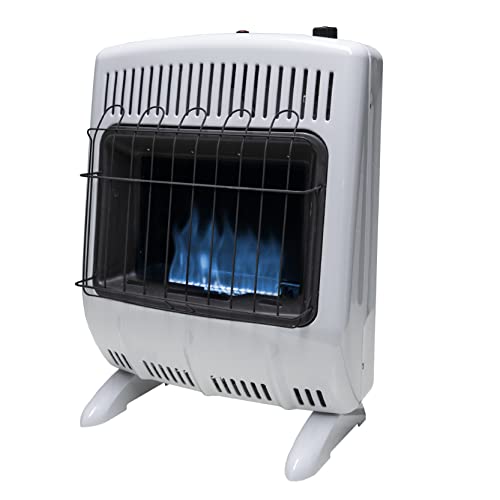
Type and fuel: Wall-mounted, vent-free propane blue flame heater. Heating output: Up to 20,000 BTU; suitable for spaces up to about 700 sq. ft.
This model includes a battery-powered electronic ignition and an integrated Oxygen Depletion Sensor (ODS) that shuts off the unit in low-oxygen conditions. As a vent-free system, it sends combustion byproducts into the room, so installation location, room size, and ventilation must comply with local codes. It’s intended as a powerful, stationary emergency heater where permitted by building regulations.
Paayox 30000 BTU Propane Tank-Top Heater
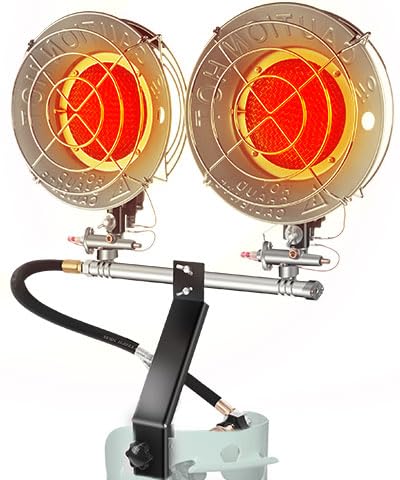
Type and fuel: Heavy-duty steel propane heater that mounts on a 20 lb tank. Heating output: Selectable 22K / 26K / 30K BTU outputs for large areas like garages or workshops.
Designed for rugged outdoor and semi-indoor applications, this unit lists tip-over protection, rapid safety shutoff, frost-proof brass valves, and wind-resistant burners. It claims high-altitude compensation and a visible flame window. Manufacturer guidance limits tank size and specifies clearances. It can serve as a backup heat source for large spaces if used in accordance with indoor-use and ventilation guidelines.
Dreo Oil Filled Radiator 1500W

Type and power: Electric oil-filled radiator rated 1500W with digital thermostat, remote, and multiple safety features. Heat delivery: Quiet, even convection heat for bedrooms and living rooms.
This electric heater offers overheat and tip-over protection, a digital timer, and an eco mode for sustained comfort. As an electric appliance, it requires grid power or a backup generator. It is useful in outage scenarios when paired with a generator or extended battery/inverter system and when quiet, steady heating is preferred over immediate radiant warmth.
Dreo Space Heater 1500W Ceramic

Type and power: 1500W PTC ceramic electric heater with thermostat, oscillation, remote, and 8 safety protections. Coverage: Approximately 200 sq. ft.
Features include tip-over and overheat protection, a 12-hour timer and fast ceramic heating that warms spaces quickly. The unit is ETL-certified and designed for direct-wall outlet use (no extension cords recommended). Like other electric heaters, it depends on electricity but can offer quick spot heating if a generator or inverter is available during an outage.
Dr Infrared Heater Portable 1500W
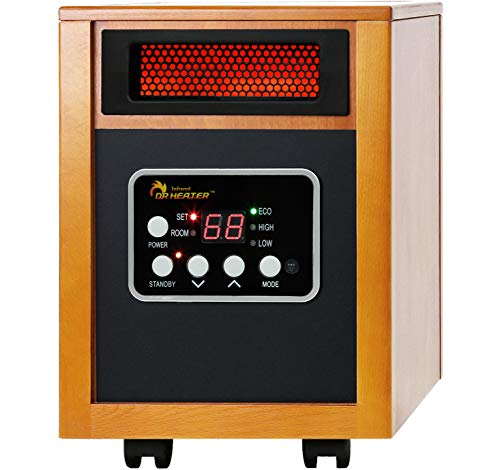
Type and power: 1500W portable heater with dual heating (infrared quartz tube + PTC) and a blower for larger room coverage. Additional features: Remote control, timer, and built-in safety protections.
The dual heating system claims higher output and efficient warm-air distribution for large rooms. This appliance requires electrical power and is suitable when paired with a generator or inverter. It includes standard safety features such as tip-over and overheat protection and can be used as a primary electric backup heater for occupied spaces when power sources are available.
Buying Guide: Choosing An Indoor Heater For Power Outages
This buying guide outlines the key factors to weigh when selecting a heater for power outages. Considerations include fuel availability, safety for indoor use, heating capacity, installation/regulatory limits, runtime logistics, and air-quality implications. The guide compares multiple perspectives to give a comprehensive view.
Fuel Source And Power Independence
Propane (portable cylinders or tank-mounted): Readily available fuel with high BTU output and long runtimes per tank. Propane heaters such as portable buddy units or tank-top models operate without electricity and are common emergency heat sources. They require safe storage and adherence to indoor-use approvals and ventilation guidance.
Canned heat / Sterno-style fuel: Units like the VESTA work without electricity and are compact for cooking plus heating. Canned fuel provides limited runtime and lower heat output compared with propane, but it is simple to store and deploy for short-duration emergency needs.
Electric heaters: Oil-filled radiators, ceramic heaters, and infrared units need grid power or a generator/inverter. They produce clean combustion-free heat indoors, are easy to use, and often include advanced safety features, but they depend on an alternate power source during outages.
Indoor Safety: Venting, Carbon Monoxide, And Sensors
Vent-free versus vented systems: Vent-free propane and blue-flame heaters can heat efficiently but release combustion byproducts into living spaces. They often have Oxygen Depletion Sensors (ODS)
Carbon monoxide (CO): Any fuel-burning heater presents a CO risk. Install a battery-powered CO detector and a working smoke alarm when operating combustion heaters indoors. Never sleep in a closed room with continuous fuel-burning appliances without proper detectors.
Tip-over and overheat protection: For any heater used around occupants, choose models with auto shutoff features and cool-touch exteriors if children or pets are present.
Heating Capacity And Room Size
BTU and wattage mapping: Propane heaters are rated in BTU (thousands of BTU), electric heaters in watts. Rough guidance: 1,500W (electric) is adequate for small-to-medium rooms (~150–250 sq. ft.), while 9K–30K BTU propane units cover wider ranges depending on insulation and ceiling height.
Match capacity to the intended space and consider localized heating (close-range radiant) versus whole-room convection. Radiant units warm occupants quickly, while larger BTU or electric convection units maintain ambient temperature over longer periods.
Runtime, Fuel Storage, And Resupply
Estimate runtime: a 1-lb disposable propane cylinder will last a limited time at high output; a 20-lb tank provides many more hours. For canned heat, multiple small cans may be used sequentially. Plan for safe fuel storage with ventilation and follow local regulations for propane storage indoors/outdoors.
Consider logistics: fuel weight, storage space, and access to resupply during prolonged outages. Electric heaters paired to generators bypass fuel-store complexity but depend on fuel for the generator.
Installation, Ventilation, And Building Codes
Stationary vent-free or wall-mounted units may require professional installation and must comply with local codes. Portable units typically need no installation but do require clearance from combustibles, flat stable surfaces, and adherence to room-size recommendations. Verify local building regulations for vent-free appliance use indoors.
Air Quality And Comfort Preferences
Fuel-burning heaters produce moisture and combustion byproducts; in small or sealed spaces, this can affect indoor air quality and humidity. Electric heaters avoid combustion emissions but may dry indoor air. Consider using a CO detector and monitoring humidity when using combustion devices indoors.
Noise, Portability, And Usability
Blower-equipped units circulate warm air faster but can be noisier. Oil-filled radiators are quiet and offer residual warmth after shutdown. Propane radiant heaters are typically quiet and highly portable. For shelters or bedrooms prioritize low-noise options and easy controls.
Comparing Emergency Scenarios
- Short outage in a well-insulated home: Portable propane buddy or canned-heat stove can provide targeted warmth when used with ventilation and CO detection.
- Extended outage with generator access: Electric oil-filled or ceramic heaters paired with a generator offer continuous, combustion-free heat for occupied rooms.
- Large unheated spaces (garages, workshops): High-BTU tank-top propane heaters or vent-free wall units can heat larger volumes, subject to clearance and code compliance.
- Small cabins or tents: Compact propane units or VESTA-style canned-heat systems are options, but always follow manufacturer safety instructions for indoor or enclosed space use.
Final Safety Checklist
- Install battery-powered CO and smoke detectors before operating combustion heaters indoors.
- Ensure ventilation and avoid airtight spaces when running fuel-burning appliances.
- Maintain clearance from combustibles and place heaters on stable, level surfaces.
- Use approved fuel types and never substitute fuels not listed by the manufacturer.
- Follow local codes for vent-free and installed propane appliances.