Compact, versatile propane heaters provide fast radiant warmth for outdoor spaces, workshops, tents, and emergency indoor use when rated safe. The table below summarizes the seven portable models covered in this guide to help quick comparison.
| Product | BTU Range | Best For |
|---|---|---|
| Mr. Heater Portable Buddy MH9BX | 4,000–9,000 BTU | Small rooms, campers, patios |
| Mr. Heater 4,000–18,000 3-Setting Unit | 4,000–18,000 BTU | Flexible indoor/outdoor heating up to 450 sq. ft. |
| Mr. Heater MH540T Tank Top 45,000 BTU | 30,000–45,000 BTU | Large outdoor events, tailgating |
| Mr. Heater MH9BX Massachusetts/Canada Approved | 4,000–9,000 BTU | Regulated markets requiring approvals |
| Mr. Heater 18,000 BTU Big Buddy | 4,000–18,000 BTU | Garages, larger rooms, dual-tank use |
| 15,000 BTU Tank-Top Radiant Heater | 10,000–15,000 BTU | Portable single-tank warmth |
| Buyplus 6,200 BTU Portable Heater | 6,200 BTU | Small outdoor areas, tents, fishing |
Mr. Heater Portable Buddy MH9BX
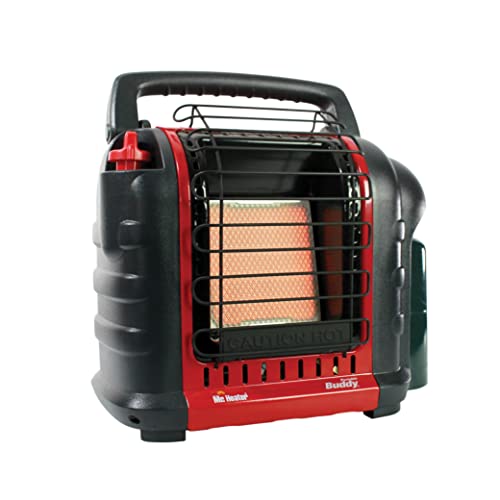
The Mr. Heater Portable Buddy MH9BX is designed to deliver radiant, sun-like warmth using infrared technology. It offers adjustable output from 4,000 to 9,000 BTUs and is intended for areas up to 225 sq. ft.
- Powerful radiant heat: Directly warms people and objects for efficient comfort.
- Improved safety features: Enhanced tip-over switch that audibly engages if the unit is shaken or tipped.
- Reliable ignition: Durable Piezo igniter provides match-free start without batteries.
Suitable for campers, small workshops, and patios where compact portability and indoor-safe operation are required. The unit’s safety interlocks and efficient output aim to reduce wasted fuel while focusing heat where it’s needed.
Mr. Heater 3-Setting Portable LP Heater
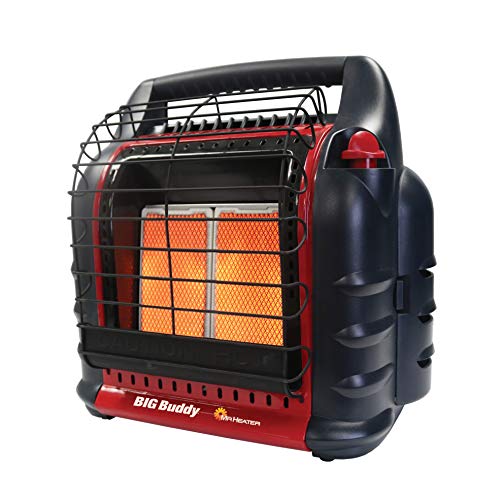
This Mr. Heater model provides variable output with three settings—4,000, 9,000, and 18,000 BTU—allowing a heat range up to 450 sq. ft. It supports connection to larger propane tanks (up to 40 lbs) with additional hose and filter accessories.
- Propane tank compatibility: Can be adapted for extended run time with larger tanks.
- Heat levels: Offers flexible warmth for camping, porches, and picnic areas.
- Simple usage: Single control knob with a piezo sparking mechanism and automatic tip-over shutoff.
This unit is aimed at users needing adjustable capacity for spaces that vary in size or when longer runtime is desired. The single-knob control simplifies operation for multi-user scenarios and quick adjustments.
Mr. Heater MH540T Tank Top 45,000 BTU

The MH540T is a high-output tank-top radiant heater designed for large outdoor areas and events. It produces 30,000 to 45,000 BTU with a 360° burner and adjustable swivel bracket for broad directional coverage.
- Adjustable powerful heating: Three heat levels for varied conditions and applications.
- 540° radiant coverage: Wide-reaching warmth to heat people and objects efficiently.
- Safety protection: Tip-over shut-off prevents operation if knocked over.
Because of its high BTU output, this model is best for tailgating, sporting events, and large outdoor work areas. It mounts on top of a propane tank for mobility while prioritizing radiant heat delivery over convective airflow.
Mr. Heater MH9BX Massachusetts/Canada Approved
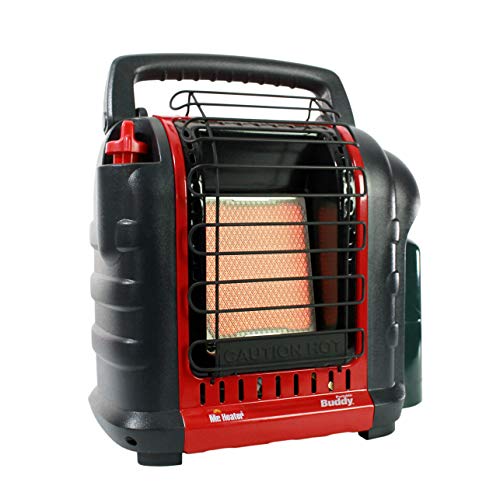
This version of the Mr. Heater buddy emphasizes regulatory approvals for use in Massachusetts and Canada. It provides 4,000 to 9,000 BTU output and claims nearly 100% combustion efficiency when used as intended.
- Space coverage: Rated for up to 225 square feet.
- Safety features: Auto shut-off if tipped, pilot light goes out, or low oxygen is detected.
- Altitude note: May shut off at elevations above 7,000 ft—important for high-altitude deployments.
The certified model targets buyers in jurisdictions with specific appliance standards and those who need documented approvals for indoor or regulated outdoor installations.
Mr. Heater 18,000 BTU Big Buddy
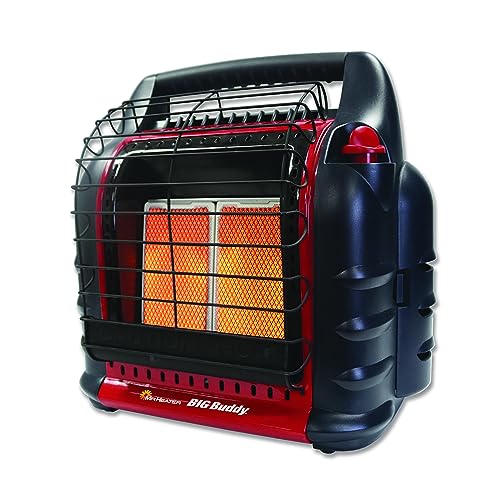
The Big Buddy expands the Buddy platform up to 18,000 BTU, heating areas up to 450 square feet. It is approved for indoor and outdoor use and includes multiple safety shutoffs.
- Wide coverage: Intended for larger spaces such as garages and bigger rooms.
- High efficiency: Clean-burning design with nearly 100% combustion efficiency when used properly.
- Safety interlocks: Auto shutoff for tip-over, pilot flame loss, or low oxygen situations.
Its compatibility with dual-tank setups and higher BTU range supports applications where sustained, stronger heat is required without sacrificing compact portability.
15,000 BTU Single Tank-Top Radiant Heater

This single-burner radiant heater mounts directly to a standard 20 lb propane tank for straightforward portability. The regulator provides high-medium-low settings: 15,000, 12,500, and 10,000 BTUs.
- Tank-top design: Quick mounting to common 20 lb tanks for immediate use.
- Variable regulator: Three output stages for temperature control.
- Tip-over safety: Includes an automatic shut-off switch to reduce accident risk.
Its balance of power and compact form factor suits backyard gatherings, small outdoor workshops, and situations where direct radiant heat is preferred over room-wide convection.
Buyplus 6,200 BTU Portable Propane Heater

The Buyplus 6,200 BTU portable heater targets small, local outdoor uses such as tents, fishing shelters, and compact patios. It emphasizes convenience with an electronic ignition and protective mesh guard.
- Heating power: 6,200 BTU for rapid warming of confined outdoor spaces.
- Electronic ignition: Push-button start for quick, reliable operation without matches.
- Safety mesh guard: Protective enclosure around the burner to reduce direct contact risks.
The unit is positioned for light-duty portable heating where simple operation and basic safety features are desired. It is suitable when compact footprint and electronic start capability are priorities.
Buying Guide: How to Choose a Portable Propane Heater
This buying guide outlines key factors to evaluate when selecting a portable propane heater, including performance metrics, safety considerations, fuel delivery, portability, approvals, and intended uses. Each topic offers objective guidance to match device attributes with application needs.
Heat Output and Coverage
BTU rating indicates maximum heat output. Lower-output units (4,000–9,000 BTU) are adequate for small rooms, tents, or personal zones. Mid-range units (10,000–18,000 BTU) serve garages, larger tents, and patios. High-output tank-top units (30,000+ BTU) are designed for large outdoor events and open-air work sites.
Estimate required BTU by room size, insulation, and outdoor exposure. Radiant heaters focus heat on people and objects; convective units warm air more broadly. Choose radiant models when you need targeted warmth and want energy directed at occupants.
Safety Features
Essential safety items include tip-over shutoff, low-oxygen/oxygen depletion sensors (ODS), and flame failure/pilot protection. Models with audible or visible indicators for safety switch engagement provide clearer feedback during operation.
For indoor use, prefer units specifically rated as indoor-safe and equipped with ODS. Use of regulators, proper hose connections, and approved fittings reduces leak risk. Always follow manufacturer ventilation requirements and local codes.
Ignition Type
Ignition methods include Piezo or matchless spark, electronic push-button, and in some cases manual pilot lighting. Piezo igniters do not require batteries and are reliable in cold conditions. Electronic ignition offers convenience but may require batteries or electrical power.
Select an ignition type based on reliability needs, expected conditions (wet/cold), and whether simplicity or convenience is the priority.
Fuel Connection and Runtime
Devices either mount on top of a standard 20 lb tank or connect via hose to remote tanks, including larger 40 lb or dual-tank setups. Tank-top heaters favor portability and simplicity. Hose-connected units provide extended runtime and higher capacity when paired with larger tanks.
Consider expected run time and availability of replacement tanks. For prolonged use, plan for larger tanks or spare cylinders and check regulator compatibility and recommended hose filters.
Portability and Mounting
Weight, dimensions, and mounting method affect portability. Tank-top units and compact buddy heaters usually prioritize ease of transport. Heavy-duty tank-top or bracket-mounted units provide more output but may need stable bases and secure mounting.
Assess carrying handles, storage footprints, and whether the unit can be used inside a vehicle or enclosed space—only select those explicitly rated for indoor use for enclosed environments.
Indoor vs Outdoor Approvals
Some heaters are approved for both indoor and outdoor use; others are designed strictly for outdoor or well-ventilated spaces. Models certified for specific regions (e.g., Massachusetts/Canada approvals) indicate compliance with local safety and emissions standards.
For indoor or partially enclosed use, choose a model with explicit indoor safety ratings and ODS. For outdoor-only models, assume no ODS and plan for open-air operation.
Altitude and Environmental Performance
Some heaters include altitude limitations; performance can change above certain elevations. Units may shut off or require adjustment when used above 7,000 ft. Cold weather can affect ignition and combustion—review manufacturer guidance for low-temperature operation.
For high-altitude or extreme cold conditions, select units with documented support for those environments or plan for field testing before relying on the heater in critical situations.
Maintenance, Reliability, and Lifespan
Regular maintenance includes cleaning burner ports, inspecting hoses and regulators, and replacing worn seals. Durable igniters and corrosion-resistant materials improve longevity in damp or salty environments.
Check manufacturer instructions for periodic inspections, recommended service intervals, and parts availability. Readily replaceable components—like piezo igniters, filters, and O-rings—reduce total cost of ownership over time.
Noise, Smell, and Combustion Characteristics
Propane heaters typically operate quietly when producing radiant heat, though tank-top burners can produce noticeable combustion sounds. Clean-burning units minimize odor; some models advertise near-100% combustion efficiency to reduce smell and emissions.
For enclosed spaces, prioritize low-odor and high-efficiency units and ensure adequate ventilation to avoid accumulation of combustion byproducts.
Use Cases and Model Matching
For small tents, personal campsites, and fishing shelters, prioritize compact units with 4,000–6,500 BTU and strong safety guards. For workshops and garages, mid-range 10,000–18,000 BTU models balance coverage and portability. For large outdoor events, high-output tank-top models provide wide-area radiant heating.
Match heater selection to expected duration, number of occupants, and environmental exposure. Consider accessories like wind screens, regulator kits, and carrying cases for enhanced usability.
Brand and Warranty Considerations
Established brands often provide wider service networks, documented certifications, and replacement parts. Warranty coverage varies—review terms for defects, parts replacement, and whether warranty conditions require original-use cases (e.g., indoor vs outdoor).
Compare warranty length and support responsiveness as part of overall value assessment when selecting between similar-spec models.
Comparing Tank-Top vs Freestanding Models
Tank-top models are compact and quick to set up on a 20 lb cylinder; they are ideal for relocatable, short-duration tasks. Freestanding models with hoses allow larger tanks for extended runtime and sometimes higher BTU output. Choose based on mobility needs and runtime expectations.
Regulatory and Safety Best Practices
Always adhere to local codes, manufacturer ventilation requirements, and safe distance clearances from flammable materials. Use approved hoses, regulators, and fittings. Store spare propane cylinders outdoors in an upright position and follow transportation rules for propane containers.
Inspect connections with soapy water before use and never operate in areas with combustible vapors or inside unventilated vehicles. Training on emergency shutoff and leak response is advisable for frequent users and event operators.
Summary of Key Considerations
- Match BTU to space size and exposure.
- Prioritize safety features like tip-over shutoff and ODS for indoor use.
- Select appropriate fuel connection for desired runtime—tank-top for portability, hose for longer duration.
- Verify approvals and altitude limitations for your operating environment.
- Factor in maintenance, parts availability, and warranty for long-term ownership.