The following comparison highlights seven tent heaters and small space heaters suited for camping, hunting blinds, ice fishing, garages, and tent use. The summary table lists the product, primary fuel or power source, and notable heat output to help identify suitable options quickly.
| Product | Power Source | Notable Output |
|---|---|---|
| Mr. Heater Portable Buddy MH9BX | Propane | 4,000–9,000 BTU |
| Amazon Basics Ceramic Space Heater | Electric (500 W) | 500 W |
| Mr. Heater Little Buddy MH4B | Propane | 3,800 BTU |
| Haoteey 13500 BTU Tent Heater Stove | Propane/Isobutane | 3,680–13,500 BTU |
| GiveBest Portable Electric Space Heater | Electric (750/1500 W) | Up to 1500 W |
| GASPOWOR 6200BTU Propane Heater | Propane | 6,200 BTU |
| HEYDUOTON Portable Propane Heater | Propane | 3,800 BTU |
Mr. Heater Portable Buddy MH9BX
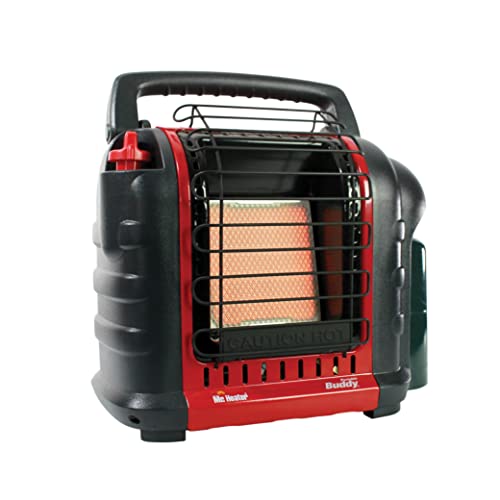
This unit provides adjustable radiant heat from 4,000 to 9,000 BTU, designed to heat up to about 225 sq. ft. It uses infrared-style radiant heating to directly warm people and objects rather than solely heating air.
- Powerful Radiant Heat: Advanced infrared-style warmth for rapid comfort.
- Safety Features: Improved tip-over safety switch that audibly engages on movement.
- Reliable Ignition: Piezo igniter for matchless startup; no batteries required.
Applicable use cases include larger tents, covered patios, and work sites where portable propane heat is permitted. The radiant design can be advantageous in drafty spaces where heating the air is less efficient.
Amazon Basics Ceramic Space Heater

This compact 500 W ceramic heater is sized for desks, small rooms, and enclosed tents with electrical access. It emphasizes portability and quick warm-up for localized comfort.
- Compact Design: Small footprint ideal for tight spaces and work surfaces.
- Portable & Lightweight: Weighs about 1.4 lbs for easy transport.
- Fast Heating: Ceramic coils deliver heat in seconds at 500 W.
Electric ceramic heaters avoid combustion risks and emissions but require power availability. They are typically quiet and suitable for enclosed electrical-safe shelters, RV hookups, or cabins.
Mr. Heater Little Buddy MH4B
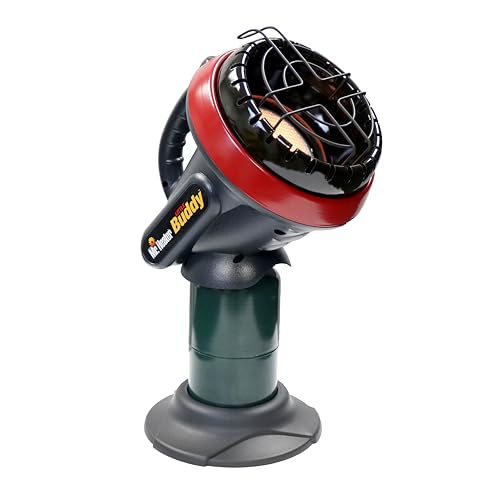
The MH4B offers 3,800 BTU radiant heat with a 45° heating angle, intended for small tents and enclosed spaces up to about 95 sq. ft. It specifies indoor-safe operation with safety systems built in.
- ODS & Tip-Over Protection: Automatic low oxygen shut-off system and tip-over safety cutout.
- Lightweight and Cordless: Operates on a 1 lb propane cylinder with up to ~5.6 hours runtime at max output.
- Simple Controls: On/off operation designed for straightforward use.
Designed for small tents and shelters, this model balances compact portability with built-in safety features for enclosed use where manufacturers allow propane operation.
Haoteey 13500 BTU Tent Heater Stove

This dual-purpose unit functions as a high-output heater and a detachable camping stove. Heat output is variable from 3,680 to 13,500 BTU, with 360-degree radiant coverage and a windscreen for outdoor use.
- Adjustable Flame Valve: Fine control to set heat between low and very high outputs.
- 2-in-1 Design: Top detaches to serve as a cooking stove supporting larger cookware.
- Fuel Compatibility: Connects to isobutane with included propane adapter and features a built-in igniter.
This unit suits mixed-use scenarios—outdoor cooking and high-heat needs for uninsulated shelters. The stove function adds versatility for trips where both heat and cooking are required.
GiveBest Portable Electric Space Heater

This electric ceramic heater offers two heat levels (750 W / 1500 W), a cool-fan mode, and a built-in thermostat for temperature control. Safety systems include overheat protection and tip-over shutoff.
- Thermostat Control: Automatic cycling to maintain set temperatures.
- Multi-Protection Safety: Flame-retardant materials, overheat shutoff, and tip-over protection.
- Compact & Quiet: Carry handle and quiet fan suitable for office, cabin, or RV power supply.
Electric heaters eliminate combustion byproducts, making them attractive where electrical power is reliable and open-flame appliances or fuel storage are restricted.
GASPOWOR 6200BTU Propane Heater

This cordless propane heater claims 6,200 BTU output with a protective face guard and cylinder stand for stability. The design focuses on outdoor comfort with enhanced user safety features.
- Safety Guard Face: Protects users from direct contact with the heating element.
- Cylinder Stand: Stabilizes the propane tank to reduce tipping risk.
- Portable Power: Cordless operation for remote or off-grid locations (propane tank not included).
Best suited for outdoor covered areas, garages, and larger tents where propane use is permitted. The added stand and guard aim to improve on-field safety in unstable conditions.
HEYDUOTON Portable Propane Heater

This foldable, lightweight propane heater advertises 3,800 BTU output, a foldable stabilized base, and one-push electric ignition for fast startup on 1 lb tanks.
- Portable & Stable Design: Foldable base and storage case for transport and protection.
- One-Push Ignition: Electric start without manual lighters or matches.
- Adjustable Heat: User-adjustable control for low-to-high output settings.
Intended for quick setup at campsites, hunting blinds, or small outdoor shelters where a compact propane heater provides rapid, localized warmth.
Buying Guide
This buying guide outlines core considerations when selecting a tent heater. It covers fuel type, heat output, safety systems, portability, runtime, and use-case tradeoffs to support an informed decision.
Fuel Type: Propane Versus Electric
Propane heaters deliver high BTU output and cordless operation, making them suited for remote campsites, ice fishing shacks, and hunting blinds without electrical access. They require fuel cylinders and produce combustion byproducts; ventilation and oxygen-monitoring systems are important in enclosed shelters.
Electric heaters (ceramic, fan-forced) provide clean heat with no combustion, suitable for cabins, RVs with shore power, or tents with safe electrical hookup. They are limited by cord length and power availability and generally do not reach the same BTU levels as propane units.
Heat Output and Coverage
Match heater capacity to interior volume. As a rule of thumb, smaller tents and enclosed spaces (<100 sq. ft.) may be comfortable with 3,000–4,000 BTU propane units or a 500–1500 W electric heater. Larger shelters require higher BTU ratings (6,000+ BTU) or multiple heat sources.
Consider insulation, ambient temperature, and wind exposure; poorly insulated or windy environments dramatically increase required output.
Safety Features to Prioritize
- ODS (Oxygen Depletion Sensor): Shuts off a propane heater if oxygen falls below safe levels—critical for tent or blind use.
- Tip-Over Protection: Automatic shutoff if the unit is knocked over; important for unstable ground.
- Overheat Shutoff: For electric models, prevents fires when internals get too hot.
- Protective Guards & Stands: Face guards and stable cylinder stands reduce burn and tipping risks.
Ignition, Fuel Compatibility, and Runtime
Ignition types include Piezo igniters, built-in electric starters, and manual lighters. Built-in igniters improve convenience but may rely on batteries or solid mechanisms.
Check fuel compatibility: some heaters accept isobutane canisters, 1 lb propane cylinders, or larger tanks via adapters. Runtime varies: small 1 lb cylinders offer a few hours at high output; larger tanks extend runtime substantially.
Portability, Weight, and Storage
Backpack or motorcycle campers need compact, lightweight units. Foldable bases, carrying cases, and low weight matter for multi-day treks. For car camping and ice fishing, heavier but higher-output units may be acceptable due to less transport constraint.
Indoor-Safe Labels and Ventilation
Some propane heaters are advertised as “indoor safe.” These often include ODS and other safety features but still require adequate ventilation and carbon monoxide awareness. Follow manufacturer guidance: never operate fuel-burning heaters in fully sealed spaces and use CO detectors when feasible.
Performance Comparisons: Radiant Versus Convective Heat
Radiant heaters warm objects and people directly and can feel more effective in drafty or partially open spaces. Convective (fan) heaters warm the air and can distribute heat throughout an enclosed shelter more evenly but may be affected by drafts.
Consider combined needs: a radiant propane heater for quick local warmth plus insulation or a secondary convective source for sustained background heat.
Noise, Maintenance, and Reliability
Propane heaters are generally quiet but some models include audible clicks from igniters. Electric fan heaters can produce a steady fan noise. Maintenance considerations include cleaning guards, checking seals and hoses on fuel connectors, and winter storage to prevent corrosion.
Regulatory and Environmental Considerations
Be aware of campground rules and local regulations regarding fuel-burning devices in tents or shelters. Environmental factors such as cold-start performance, high-altitude operation, and fuel availability can influence long-term usability.
Use-Case Guidance
For remote or off-grid trips where electricity is unavailable, propane cordless models provide flexibility and higher BTU. For powered sites, cabins, and RVs, electric ceramic heaters offer clean operation and simpler safety profiles. If cooking and heating are both required, multi-function stove-heater hybrids can reduce gear count but demand careful placement and ventilation.