The following guide compares seven top-rated kerosene heaters suited for indoor and outdoor use, from compact radiant units to high-output forced-air models. The table below summarizes each pick so readers can scan BTU output, typical coverage, and the heater type at a glance.
| Product | BTU | Coverage | Type |
|---|---|---|---|
| Dyna-Glo Indoor Convection (WK95C8) | 23,000 | Up to 1,000 sq. ft. | Convection (no electricity) |
| Sengoku HeatMate HMC-23K | 23,500 | Up to 1,000 sq. ft. | Portable indoor/outdoor |
| Dyna-Glo Radiant RMC-55R7 | 10,000 | Up to 500 sq. ft. | Radiant (no electricity) |
| Sengoku Portable KeroHeat | 23,500 | Up to 900 sq. ft. | Portable indoor/outdoor |
| Dyna-Glo Forced Air KFA50DGD | 50,000 | Up to 1,200 sq. ft. | Forced-air |
| Mr. Heater 185,000 BTU | 185,000 | Up to ~4,625 sq. ft. | Multi-fuel forced-air |
| VEVOR 215,000 BTU Torpedo | 215,000 | Industrial/workshop coverage | Heavy-duty forced-air |
Dyna-Glo 23,800 BTU Convection

This Dyna-Glo model is a convection-style kerosene heater rated at 23,000 BTU/hour and advertised to heat up to 1,000 sq. ft. It operates without electricity, relying on kerosene combustion and natural air circulation to distribute warmth, which makes it suitable for power outages and off-grid situations.
Key functional points include straightforward fuel filling, a built-in tank sized for multi-hour runtime, and a design intended for indoor spaces such as garages, basements, and workrooms. Convection units warm the air for whole-room comfort rather than directing radiant heat at a single spot.
Sengoku HeatMate 23,500 BTU
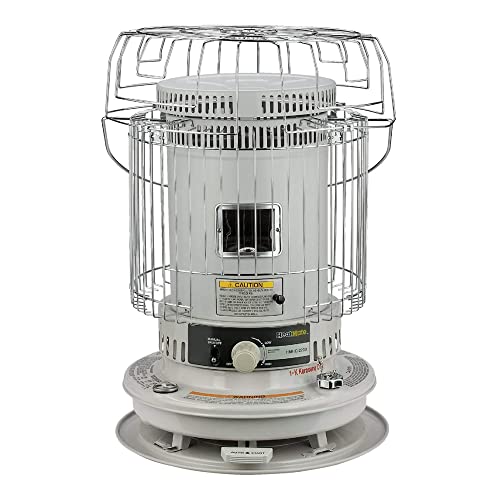
The Sengoku HeatMate HMC-23K provides 23,500 BTU and claims coverage of up to 1,000 square feet. It includes a 1.9-gallon fuel tank delivering up to about 12 hours of operation per fill under typical settings.
Safety and convenience features listed include automatic shutoff, a tip-over switch, and a protective grill. The unit is designed for both indoor and outdoor use and is often marketed for emergency heating, garages, workshops, and camping where a cordless heat source is needed.
Dyna-Glo 10,000 BTU Radiant Heater

The Dyna-Glo RMC-55R7 is a radiant kerosene heater producing 10,000 BTU and rated to heat roughly 500 sq. ft. Radiant models deliver heat directly to people and objects, making them efficient for spot heating in workshops, small rooms, or outdoor covered spaces.
This unit is designed to operate without electricity, offering a simple ignition system and compact footprint. Radiant heaters generally provide faster perceived warmth at close range but do not circulate warm air for full-room heating as convection models do.
Sengoku Portable 23,500 BTU KeroHeat

This portable Sengoku model delivers 23,500 BTU with a 1.9-gallon tank and is recommended for spaces up to about 900 square feet. Included accessories often listed are a siphon pump and required batteries to power an automatic ignition.
Features highlight a push-to-start control and an automatic safety fuel shut-off, designed to reduce the need for matches or external power during ignition. The unit is intended for versatile use indoors and outdoors with portability in mind.
Dyna-Glo 50,000 BTU Forced Air

The Dyna-Glo KFA50DGD is a 50,000 BTU forced-air kerosene heater intended for larger garages, shops, and job sites with heating claims near 1,200 sq. ft. Forced-air models use a fan to move heated air rapidly, which is effective for warming larger spaces or spot-warming several zones.
Design elements include a sturdy case, an easy-lift carrying handle, and airflow-oriented outputs. Forced-air heaters can provide rapid temperature rise but require ventilation considerations and adequate clearance for safe operation.
Mr. Heater 185,000 BTU Multi-Fuel

The Mr. Heater forced-air unit produces 185,000 BTU and is designed as a multi-fuel heater compatible with kerosene, diesel #1/#2, fuel oil #1/#2, and Jet A fuel. It is rated to heat up to about 4,625 sq. ft. depending on building conditions.
Key features include a built-in thermostat and LED diagnostics for troubleshooting. The unit is targeted toward large shops, construction sites, and agricultural buildings where heavy-duty, flexible fuel options and high-output heating are required.
VEVOR 215,000 BTU Industrial Torpedo

The VEVOR torpedo-style heater is a heavy-duty forced-air model delivering 215,000 BTU with a large 13.2-gallon tank. It supports both kerosene and diesel (one fuel type at a time) and is advertised for warming very large workspaces, barns, or industrial areas.
Features include a thermostat knob and room temperature display with adjustable setpoints, overheat protection, automatic low-fuel shutoff, dual fuel filtration to reduce smoke and odor, and a pressure gauge for monitoring. This unit emphasizes continuous duty and energy efficiency for tough environments.
Buying Guide
Choosing a kerosene heater requires balancing coverage needs, fuel logistics, safety features, and intended use (indoor vs. outdoor). The sections below outline the most important considerations and compare common heater types to help identify the best match.
Heat Output and Coverage
- BTU Rating: BTU measures potential heat output. Small rooms and spot heating often need 5,000–15,000 BTU, while whole-garage or shop heating may require 50,000 BTU or more.
- Square Foot Estimates: Manufacturer coverage claims assume average ceiling heights and insulation. Use BTU per square foot as a rule of thumb—about 20–30 BTU per sq. ft. for basic heating; adjust upward for cold climates or poor insulation.
Heater Type: Radiant, Convection, Forced-Air
- Radiant Heaters (e.g., 10,000 BTU models): Heat objects and people directly; efficient for spot heating and quick perceived warmth. Best for small work areas or outdoor covered spaces.
- Convection Heaters (e.g., 23,000 BTU cordless models): Heat air and provide more even whole-room comfort; many run without electricity for emergency use.
- Forced-Air Heaters (50,000 BTU+): Move warm air quickly with a fan, heating large spaces efficiently. Typically used in workshops, construction, or agricultural buildings. Require attention to ventilation and clearances.
Fuel Capacity and Runtime
- Tank Size: Models with 1.5–2.0 gallon tanks commonly provide 8–12 hours of runtime at moderate settings. Large industrial units have much larger tanks for extended runtime.
- Fuel Type: Use rated kerosene (often 1-K) for clean-burning performance. Some forced-air units accept diesel or multiple fuels—verify compatibility and follow manufacturer fuel recommendations to limit odor and maintenance.
Safety Features and Indoor Use
- Automatic Shutoff: A key safety feature that cuts fuel flow if the unit tips, overheats, or senses a malfunction.
- Tip-Over Switch: Important for portable units used in garages or near high-traffic areas.
- Ventilation: Any indoor combustion heater requires ventilation to prevent buildup of carbon monoxide and fumes. Follow manufacturer clearance and ventilation guidelines strictly.
- Oxygen Depletion Sensors: Some models include sensors to detect low oxygen—these are especially relevant for indoor use.
Ignition and Convenience
- Push-to-Start/Ignition: Models with battery-assisted or push-button ignition remove the need for matches and simplify operation during power outages.
- Portability: Carry handles, weight, and overall size matter if the unit will be moved between sites.
- Accessories: Siphon pumps, spare wicks, and maintenance kits simplify fuel handling and upkeep.
Maintenance and Longevity
- Wick and Filter Care: Inspect and replace wicks per manufacturer intervals. Clean or replace fuel filters periodically to avoid clogging and smoke.
- Storage: Empty fuel before long-term storage and follow winterization instructions to prevent gumming. Store kerosene in approved containers in a cool, ventilated location.
- Serviceability: For industrial models, check for available parts and service centers; DIY replacement components reduce downtime.
Comparative Considerations
- Indoor Emergency Use: Convection and radiant models with no-electricity ignition are prioritized for home emergency kits and power outages.
- Worksite and Large Spaces: Forced-air, multi-fuel units deliver higher BTU for fast, broad-area heating but demand more ventilation and fuel handling considerations.
- Portability vs. Capacity: Higher-capacity tanks reduce refueling frequency but increase weight. Choose based on how often the heater will be relocated.
Before purchase, verify local codes and manufacturer recommendations for indoor combustion devices and plan for CO monitoring and adequate ventilation when operating kerosene heaters indoors.