The following guide compares top-rated electric pool heaters suited for a range of pool sizes and budgets, from compact 5.5 kW units to large inverter heat pumps. The table summarizes each model’s key capacity and compatibility to help narrow choices quickly.
| Model | Capacity / Type | Recommended Pool |
|---|---|---|
| WOPOLTOP 100,000 BTU | Full DC Inverter Heat Pump | Up to 26,000 gallons |
| AQUASTRONG 75,000 BTU | Inverter Heat Pump | Up to 21,000 gallons |
| TURBRO 50,000 BTU | Inverter Heat Pump | Up to 16,000 gallons |
| FibroPool FH270 70,000 BTU | High-Efficiency Heat Pump | Up to 15,000 gallons (inground) |
| VARMINPOOL 16,000 BTU | Smart Inverter 110V | Up to 5,400 gallons (above ground) |
| MICOE 17,000 BTU | Compact Electric Heater | Up to 5,000 gallons (above ground) |
| YJSDXBSF 5.5 kW 220V | Electric Immersion/Inline Heater | Approx. 650 gallons / spas |
WOPOLTOP 100,000 BTU Heat Pump

This unit is a 30KW full DC inverter pool heat pump engineered for large residential pools. It is specified for both above-ground and inground installations and lists a recommended maximum pool capacity of 26,000 gallons. The model emphasizes frequency conversion technology to reduce power draw and avoid frequent on/off cycles, improving operational efficiency and component longevity.
Key hardware includes a high-quality compressor and a fully DC variable frequency fan motor, allowing the system to modulate output across a wide range. The manufacturer specifies a COP (coefficient of performance) up to 6.8, indicating good heat transfer efficiency under rated conditions. The unit supports both heating and cooling modes and features WiFi smart control via an app for remote monitoring and setpoint adjustment.
Suitable use cases: owners who need large-capacity heating and prefer smart controls to manage schedules and temperature from a smartphone. Consider local climate and installation clearances for inverter heat pumps.
AQUASTRONG 75,000 BTU Heat Pump

The AQUASTRONG inverter heat pump provides a 75,000 BTU heating capacity and is rated for pools up to 21,000 gallons. It advertises dual-mode heating and cooling with temperature control ranges from 47–104°F for heating and 47–83°F for cooling, which supports both extending the swim season and moderating water during heat waves.
Performance highlights include full DC variable frequency technology with a manufacturer-stated COP that can reach high efficiency levels, and an adaptive frequency conversion algorithm designed to reduce electrical consumption. The unit features WiFi capability and timer controls so users can program heating schedules and control remotely through the accompanying app.
Suitable for larger residential pools where rapid heating and programmable control are priorities. Verify ambient operating range and local codes for outdoor HVAC equipment before installation.
TURBRO 50,000 BTU Beluga Series

The TURBRO Beluga series presents a mid-range 50,000 BTU inverter heat pump suitable for pools up to 16,000 gallons. Designed to extend the swimming season, it uses a full DC inverter compressor that adjusts heating power dynamically based on ambient conditions and target water temperature.
The model advertises high energy performance with a COP up to 15.90 under specified conditions and claims substantial fuel-cost reduction compared to gas or propane heaters. Additional features include WiFi enablement, timer functions, and an IPX4 waterproof rating for outdoor durability.
As a mid-capacity inverter option, this heater balances output and efficiency for medium-to-large residential pools. Consider inlet/outlet plumbing compatibility and the noise profile when positioning the unit near living spaces.
FibroPool FH270 70,000 BTU Heat Pump

The FibroPool FH270 is an all-electric heat pump rated at 70,000 BTU, suitable for in-ground pools up to 15,000 gallons and some above-ground configurations. The design emphasizes clean electric operation as an alternative to natural gas or propane, using ambient air heat transfer to warm pool water.
Key engineered elements include high-pressure differential compressors and a titanium heat exchanger for corrosion resistance and reliable thermal transfer. The product is recommended for humid climates with ambient temperatures down to approximately 50°F for optimal performance; dry and colder climates can reduce heat pump efficacy.
Use cases: homeowners in humid temperate climates seeking a low-maintenance, energy-efficient electric heating option that avoids fossil fuel combustion. Confirm local ambient temperature ranges align with heat pump operating specifications for best results.
VARMINPOOL 16,000 BTU 110V Heat Pump

This compact inverter pool heat pump provides 16,000 BTU and is designed for above-ground pools up to 5,400 gallons. The unit runs on standard 110V power, which simplifies installation for many backyard pools without dedicated 220V circuits.
Features highlight smart inverter technology for low power draw and continuous operation at efficient levels, and built-in WiFi control via the Smart Life app for remote temperature monitoring and scheduling. A titanium heat exchanger is specified for durability with fresh or salt water.
Ideal for above-ground pool owners seeking a plug-and-play heat pump that balances modest output with energy savings and remote control conveniences. Check rated ambient temperature operating ranges when planning use in cooler seasons.
MICOE 17,000 BTU Compact Heater

The MICOE unit is a compact electric pool heater rated at 17,000 BTU, designed for above-ground pools of approximately 5,000 gallons or for typical diameters between 8 and 15 feet. It emphasizes quiet operation at around 50 dB and comes with an easy install kit to simplify setup.
Performance claims include faster heating—up to 50% quicker than some standard electric heaters—and energy savings of about 40% according to manufacturer guidance. The unit operates across a wide temperature envelope and can heat up to 104°F under optimal conditions.
Best for small to medium above-ground pools where noise, installation ease, and compact footprint are key considerations. Confirm pump flow specifications and plumbing connections for compatibility.
YJSDXBSF 5.5 kW 220V Pool Heater
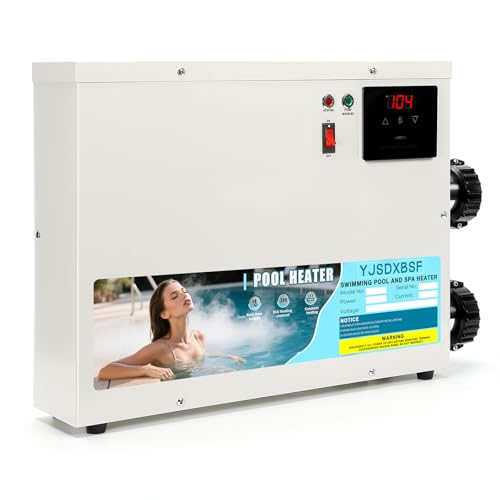
This 5.5 kW (220V) electric heater is compact and oriented toward very small pools, spas, or portable tubs—manufacturer guidance cites suitability for pools of roughly 650 gallons. It uses inline heater tubes constructed from 316 stainless steel for improved heat transfer and corrosion resistance.
Control features include a digital touchscreen thermostat and automatic safety protections such as high-temperature cutout and water-flow sensing to prevent dry-heating scenarios. The unit requires connection to a separate circulation pump and specifies inlet/outlet fitting sizes and maximum pump ratings to ensure safe operation.
Appropriate for small installations, hot tubs, or supplemental heating. Confirm electrical circuit capacity, breaker protection, and local code requirements for hardwired electric heaters before purchase.
Buying Guide: How To Choose The Best Electric Pool Heater
Selecting the right electric pool heater requires balancing capacity, operating efficiency, installation constraints, and climate suitability. The points below outline objective considerations and comparisons across the models above.
Heating Capacity and Pool Size
Match heater output (BTU or kW) to the pool’s volume and intended temperature rise. Larger pools need higher BTU ratings and, for fast recovery, higher continuous output. Heat pump models list recommended pool capacities; inline electric heaters are best for small pools or spas.
Heat Pump Versus Inline Electric Heater
Heat pumps extract ambient air energy and typically have high COPs, making them more efficient over time for year-round pool heating. They perform best when ambient temperatures are moderate and humidity is present.
Inline electric heaters provide predictable watt-for-watt heating regardless of air temperature, making them suitable for very small volumes or climates where heat pump effectiveness drops. However, they generally consume more electricity per unit of heat produced.
Inverter Technology And COP
Inverter-driven compressors and fans allow variable output and smoother cycling. Higher COP values indicate greater efficiency; however, actual COP depends on ambient conditions, setpoint, and water temperature. Check manufacturer test conditions to compare apples-to-apples.
Power Supply And Installation
Verify site electrical capacity. Large heat pumps commonly require 220–240V connections and dedicated circuits, while some compact models run on 110–120V. Inline electric heaters may require hardwiring and specific breaker sizes. Ensure trained professionals handle electrical and plumbing hookups to meet code.
Climate And Operating Range
Heat pumps list recommended ambient temperature ranges. Units like the FibroPool and WOPOLTOP perform best above specified minimum ambient temperatures (often near 50°F). For consistently cold climates, supplemental heating or a traditional gas heater may be required to reach desired water temperatures.
Durability And Materials
Look for corrosion-resistant heat exchangers (titanium or stainless steel) when pools use salt systems or live near corrosive environments. Robust compressors, weather-rated cabinets, and IP protection ratings support longevity in outdoor installations.
Controls, Connectivity, And Automation
WiFi-enabled models allow remote temperature monitoring, scheduling, and diagnostics. Timers and app-based controls provide convenience for maintaining setpoints efficiently. Evaluate whether app ecosystems integrate with existing home automation if that matters for management.
Noise And Siting Considerations
Heat pumps generate fan and compressor noise. Assess decibel ratings and place units to minimize disturbance to living spaces and neighbors, following clearance recommendations in installation manuals for airflow and service access.
Maintenance And Serviceability
Regular filter and heat exchanger inspections, water chemistry balance, and clearance for airflow are critical. Inverter heat pumps may require firmware or controller updates; confirm parts availability and service networks for the brand in your region.
Energy Usage And Operating Cost
Estimate operating cost by comparing COP or manufacturer efficiency claims to local electricity rates. Heat pumps typically cost less to run per BTU than resistive electric heaters, but duty cycle, set temperature, and climate will affect real-world bills.
Safety Features
Look for over-temperature shutoffs, water-flow sensors, pressure switches, and proper grounding. Inline electric heaters should include flow monitoring and high-temperature protection to prevent damage or hazards if circulation stops.
Warranty And Support
Review warranty length on compressors, heat exchangers, and other components. Some manufacturers separate coverage for parts and labor. Consider availability of local installers or technicians familiar with inverter heat pumps or specific brand models.
Comparative Summary
- Large pools: Choose high-BTU inverter heat pumps (WOPOLTOP, AQUASTRONG) for capacity and efficiency.
- Medium pools: Mid-range inverter units (TURBRO, FibroPool) balance performance and cost.
- Small/above-ground pools: Compact 110V/120V inverter units (VARMINPOOL, MICOE) provide easier installation and adequate output.
- Spas or very small tubs: Inline 220V resistive heaters (YJSDXBSF) offer predictable, immediate heating for limited volumes.
When evaluating models, use manufacturer specifications, local climate data, and the pool’s hydraulic characteristics to calculate the required heat load and expected run times. Professional consultation and proper installation will ensure safe, efficient operation consistent with product guidelines.