Crawl spaces under houses can be a nightmare during high humidity summer. Too much moisture in a crawl space encourages the development of mold, wood rot, pest infestation and bad smells.
During the summer, a dedicated crawl space dehumidifier can be installed to ensure that the humidity level is healthy and that the structural integrity of a home and the quality of its indoor air are not compromised.
The best crawl space dehumidifiers of the summer are listed below based on a balance of energy efficiency, price, and performance, and a convenient comparison table is given, as well as a buying guide to help homeowners make the right choice.
| Dehumidifier | Capacity (PPD) | Coverage (sq ft) | Built-In Pump | Energy Star |
|---|---|---|---|---|
| AprilAire E100 Pro 100-Pint | 100 | up to 5,500 | No | Yes (Most Efficient) |
| AlorAir Sentinel HD55 55-Pint | 55 | up to 1,300 | No | Yes |
| AlorAir Sentinel HDi90 90-Pint | 90 | up to 2,600 | Yes | Yes |
| Moiswell 145-Pint | 145* | up to 6,000 | Yes | Yes |
| Dri-Eaz Revolution LGR 80-Pint | 80 | up to ~2,000 | Yes | No |
*Capacity measured under saturation conditions (approximately 70 PPD under typical conditions).
#1 AprilAire E100 Pro 100-Pint Crawl Space Dehumidifier
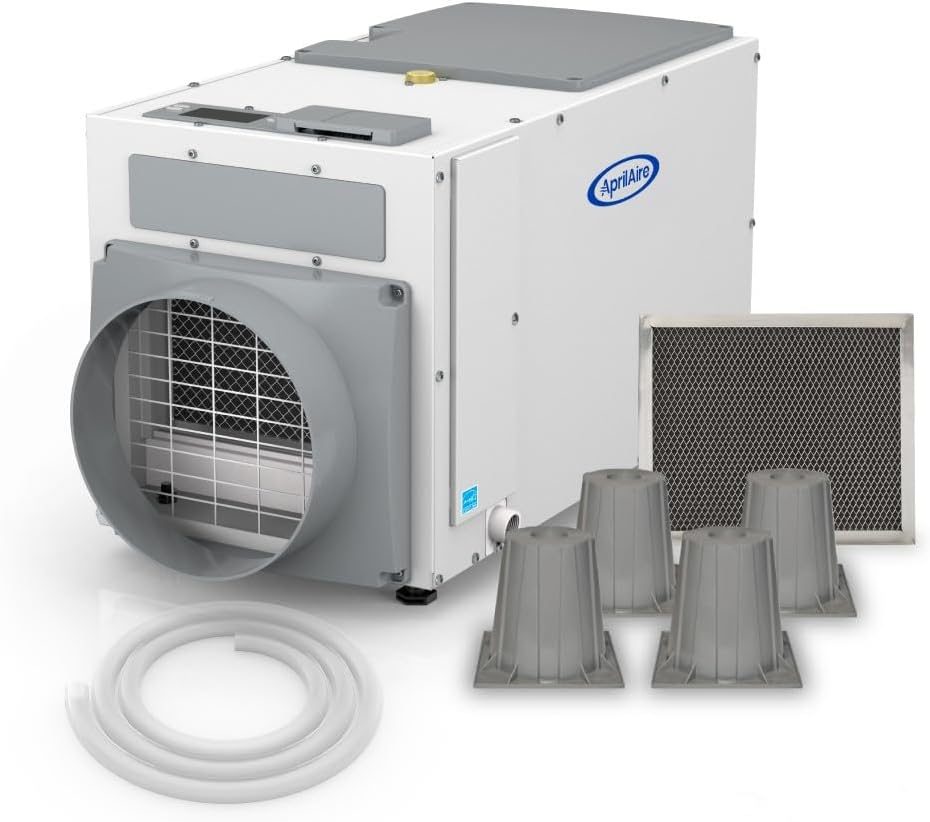
The AprilAire E100 Pro is a strong whole-house dehumidifier that is suitable to be used in crawl spaces and basements. It has the capacity to eliminate moisture of up to 100 pints per day, which is enough to dry up to an area of 5,500 sq. ft.
This large capacity is suitable in hot and humid weather in summer when humidity is at its peak. Although it has a wide coverage, the E100 is an Energy Star Most Efficient certified unit and thus it regulates humidity without using a lot of energy. The homeowner will have the benefit of efficient and automatic operation, just set the desired humidity and the E100 switches on and off to keep the target humidity.
The AprilAire E100 is constructed using professional-grade parts and has corrosion-resistant aluminum coils and a washable MERV-8 filter to capture dust and mold spores. It is a set and forget solution: no need to empty the water bucket since it is constantly drained.
It should be noted that this model is based on gravity drainage (no condensate pump is installed), so it requires a floor drain or an external pump to remove water. The digital control panel is convenient to operate in order to change the humidity settings. The AprilAire E100 has a strong 5-year warranty and a track record of performance, which gives peace of mind and long-term moisture protection to any crawl space or basement.
#2 AlorAir Sentinel HD55 Crawl Space Dehumidifier (55 Pint)
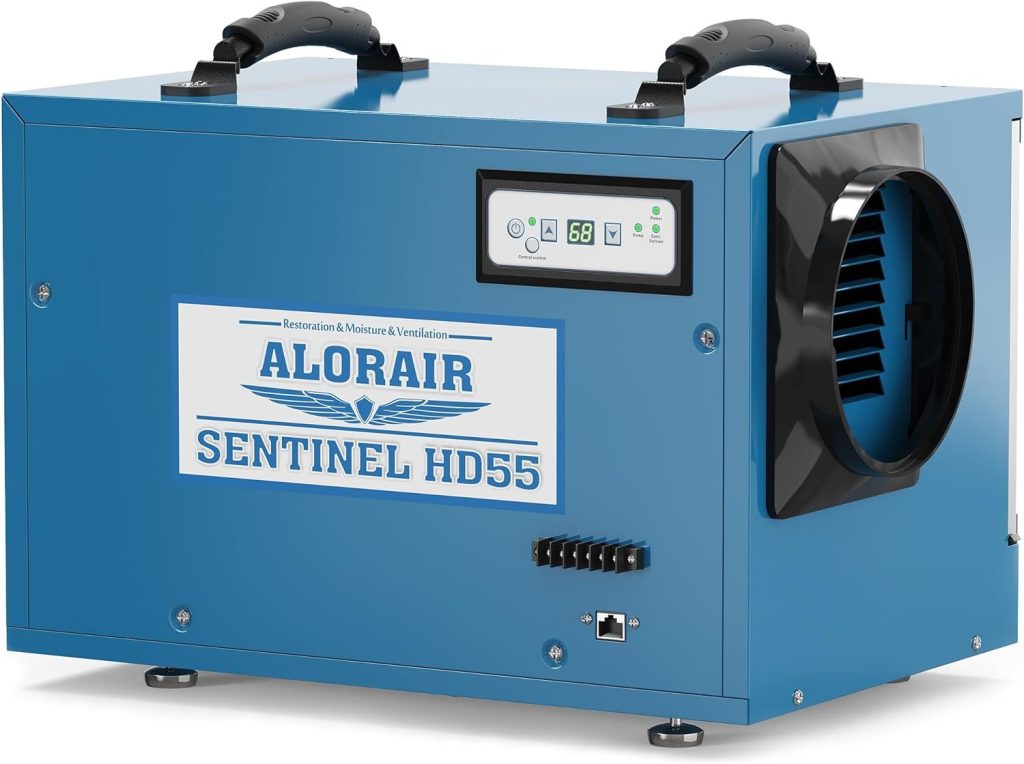
AlorAir Sentinel HD55 is a dehumidifier that is recommended by many homeowners who want to have a good crawl space dehumidifier at a low price. The HD55 is rated to extract approximately 55 pints per day under normal conditions (up to 113 PPD in saturated conditions), and is appropriate in spaces of up to 1,2001,300 sq. ft. (which includes most residential crawl spaces).
It is a small and energy-efficient unit, which has an Energy Star certification to make sure that it is cost-effective to use even during the summer when it is used all the time.
The Sentinel HD55 has a powerful feature despite its affordable size. It has a long-lasting rotary compressor and a washable air filter to cover its coils and enhance the quality of air. It has an automatic defrost feature which enables it to operate at lower temperatures in the crawl space without freezing.
It does not have an internal pump, the design is gravity-draining, but it has a hose to drain continuously. The HD55 also has optional remote control (sold separately) which is convenient when you need to change settings when you are outside the crawl space. The AlorAir HD55 is a very quiet and dependable moisture control unit with medium capacity that is very economical to operate and maintain. It keeps crawl spaces dry and free of mold during the hot and humid summer months.
#3 AlorAir Sentinel HDi90 Dehumidifier with Pump (90 Pint)
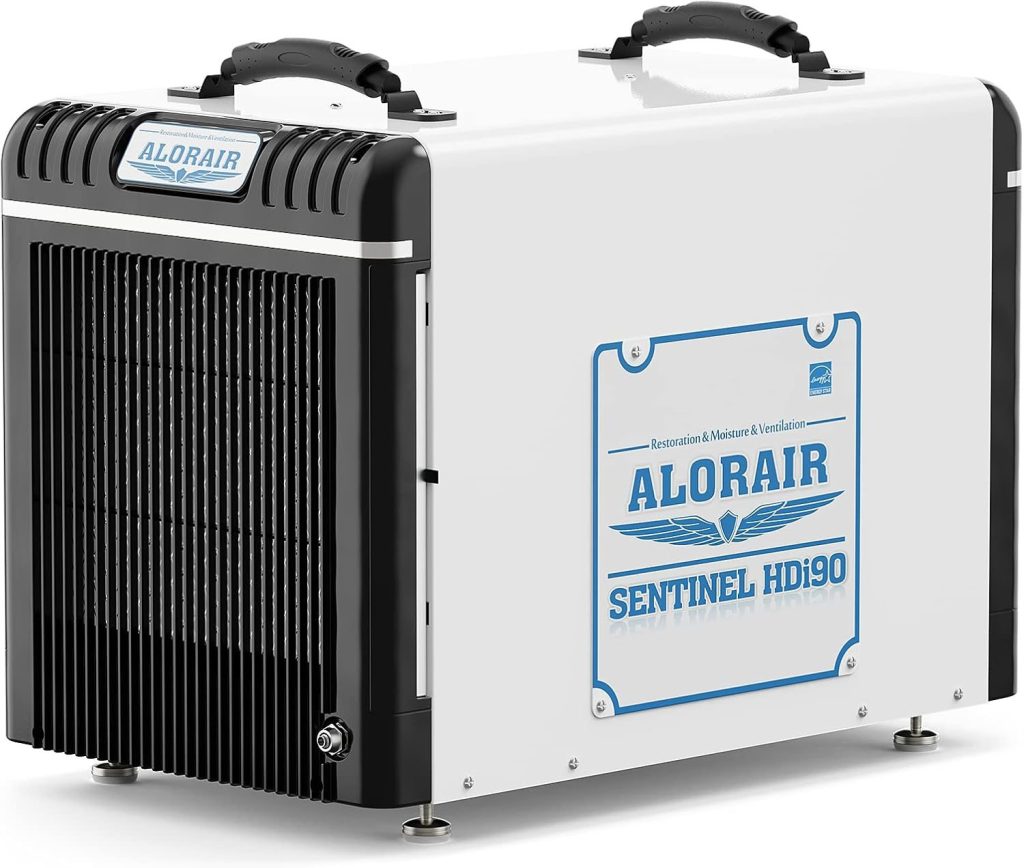
The AlorAir Sentinel HDi90 provides high-performance dehumidification on larger crawl spaces or spaces that are too wet. The HDi90 is a commercial-grade dehumidifier that extracts up to 90 pints per day (and almost 198 PPD at saturation) and can serve a space of approximately 2,500 to 2,600 sq. ft.
The HDi90 is constructed using heavy-duty parts, and it is capable of quickly removing moisture even in difficult environments, making it a perfect choice in humid summer weather or crawl spaces that experience frequent water problems. It is also Energy Star rated meaning that it is efficient in its size.
An important aspect of the Sentinel HDi90 is that it has an in-built condensate pump. The built in pump will automatically force water up and out and the flexibility to drain moisture even when there is no floor drain in the vicinity is a huge plus in crawl space installations.
The unit has auto-restart (memory restart) so that it can restart with previous settings after power outage and an automatic defrost system to avoid freeze-ups. Its alloy evaporator coils are made of rare-earth, which is resistant to corrosion to last longer. The digital humidistat controls and the possibility to duct the intake/outlet to distribute it better will be appreciated by the homeowners. Although the HDi90 is more expensive and more cumbersome to work with, its high drying capacity and convenience (such as the pump and remote monitoring feature) make it a favorite choice to fight the extreme summer humidity in a large crawl space or basement.
#4 Moiswell 145-Pint Crawl Space Dehumidifier with Pump

The Moiswell 145-Pint dehumidifier has a high-capacity moisture removal with a rather low price, which is why it is a good choice of a dehumidifier to buy by a homeowner who has a large humidity issue and does not want to spend a lot of money on the device.
It is marketed to process up to 145 pints per day in perfect conditions (approximately 70 PPD under normal indoor conditions) and serve up to 5,0005,0006,000 sq. ft. This capacity is sufficient to cover most crawl spaces and even a lot of basements. Although this is a relatively new brand in the market, the Moiswell dehumidifier has gained high customer ratings due to its good performance and value.
The Moiswell 145-Pint unit is designed with a built-in condensate pump and long drain hose that makes installation easy since the water is automatically removed up and out of the crawl space. It has a digital control interface that is simple to use and it enables one to set a preferred level of humidity. The unit is also Energy Star certified which is an indication of its efficiency.
It weighs about 60+ pounds and is fairly small considering the capacity and can be squeezed through standard crawl space openings. The construction details such as auto-defrost, overload protection and heavy duty housing make it possible to operate continuously in a wet environment. Although Moiswell is a younger brand (and its long-term reliability remains to be tested), it does have a 5-year warranty/support to give you peace of mind. In general, the Moiswell is a unique product that has a high pint capacity and is affordable in high moisture regions during the summer.
#5 Dri-Eaz Revolution LGR Commercial Dehumidifier (F413)
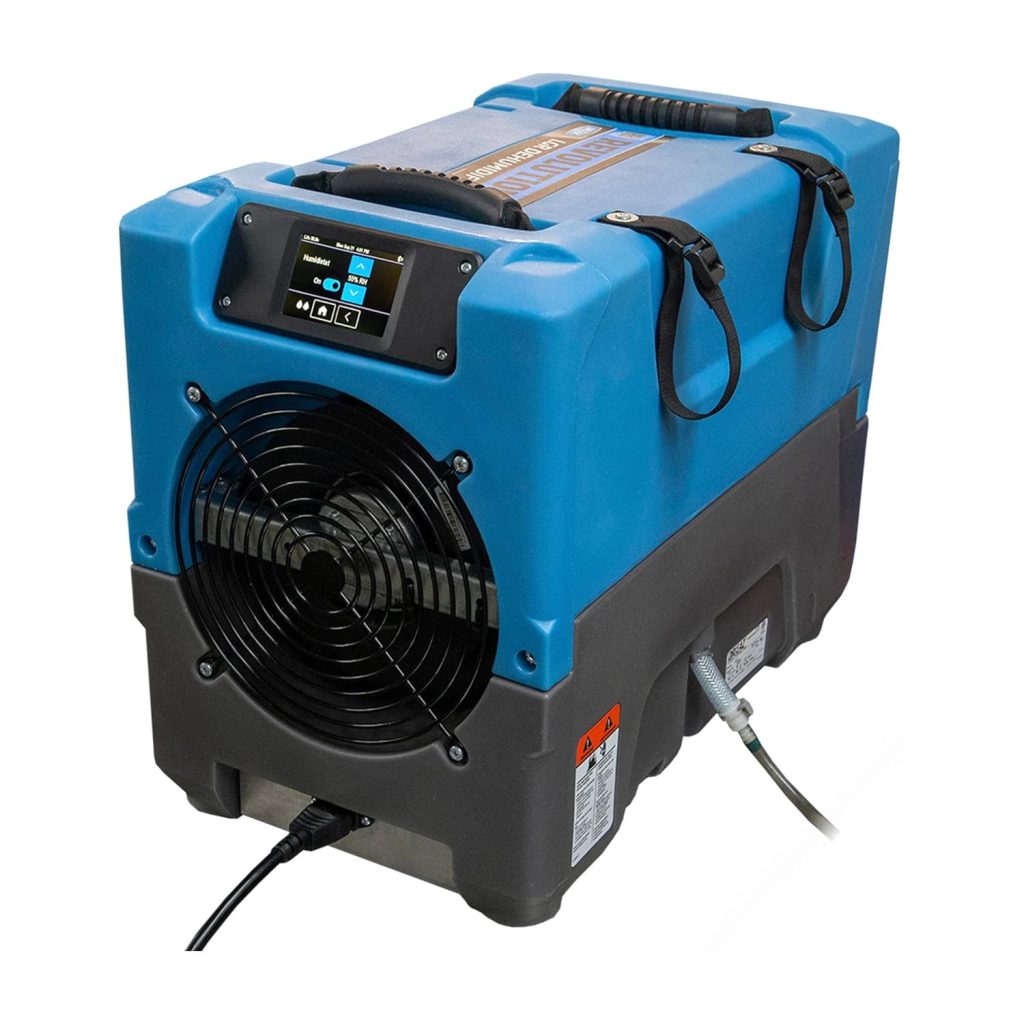
The Dri-Eaz Revolution LGR is a commercial-level dehumidifier that can be applied by homeowners in case of extreme moisture in the crawl space or flooding. The Revolution LGR is known in the restoration industry by its performance, capable of removing approximately 80 pints per day (AHAM standard) and about 130 pints when fully saturated.
It is rated to be able to dry enclosed areas up to approximately 8,000 cubic feet (approximately 1,500-2,000 sq. ft. of crawl space area). The unit is very compact in size with a form factor of only 12.5 inches wide, despite its powerful drying capacity, it is easy to maneuver into small crawl space openings. It also has an in-built humidistat to fix the desired humidity.
Among the outstanding attributes of the Dri-Eaz Revolution is the in-built automatic pump, which has the capability of spraying water as far as 20 feet, which makes water extraction in any environment easy. The LGR (Low Grain Refrigerant) technology implies that it will be efficient even when the humidity levels are low and it will draw moisture to bring the humidity readings down compared to most standard units.
This dehumidifier has a rugged rotomolded housing, which is designed to work in harsh conditions (it is often used to dry out flooded houses). It is accompanied by a long drain hose and an inbuilt handle to make it portable. Although the Revolution is a more upscale, more expensive unit that is not Energy Star rated, it provides dependable high performance in challenging conditions, and is a great option in a homeowner who requires professional-grade drying in his or her crawl space during humid summers or after floods.
Buying Guide for Crawl Space Dehumidifiers
Why Use a Dehumidifier in Your Crawl Space During Summer?
Crawl spaces are susceptible to moisture and this is more likely to occur during the summer when the air is warmer and therefore more humid. This moist air may get in through vents or the ground and condense in the cooler crawl space resulting in high humidity levels.
A wet crawl space during summer will foster the growth of mold and mildew, may cause the wooden framing or subfloors to rot and may attract pests such as termites and dust mites. These problems do not only pose a risk to the structural integrity of a house, but they also may impact the indoor air quality (as the air of the crawl space may seep into the living spaces).
A dehumidifier in the crawl space in summer regulates the amount of moisture and maintains relative humidity within the safe zone (4555%). Keeping the environment dry, homeowners will be able to avoid the development of mold and wood decay, insulation and HVAC ductwork destruction, and musty odors.
Essentially, a crawl space dehumidifier is the insurance of your home foundation and air quality at the most humid time of the year. It is particularly significant to houses with encapsulated (sealed) crawl spaces, where dehumidification is usually the sole method of moisture control after the vents are sealed.
Key Factors When Choosing the Best Crawl Space Dehumidifier
Capacity and Coverage: Pint capacity of the dehumidifier should be matched with the size and conditions of the crawl space. Crawl spaces that are large or have serious moisture issues will need more capacity units (e.g., 70-90+ pint models) to be able to lower the humidity.
The manufacturers will usually specify a maximum area in square feet of coverage, this should be taken as a rough guide. It is prudent to select a unit that has a little more capacity during especially wet summer months or in the event your crawl space is not well sealed. A small dehumidifier can have difficulties maintaining the humidity, and it will be working all the time without achieving the desired humidity.
Energy Efficiency: Due to the fact that crawl space dehumidifiers are frequently left operating 24/7 during the summer months, energy efficiency is paramount to ensure that the electric bills are under control. Seek models that are Energy Star certified, which implies that they are highly efficient.
A unit that is efficient will be able to extract more moisture using less watt of electricity. Even some of the best models (such as the AprilAire E100) can be considered as Energy Star Most Efficient, which means that they are extremely efficient. In a season, a dehumidifier, which is efficient, can save a lot of energy as compared to a non-certified one.
Built-in Pump vs. Gravity Drainage: Take into consideration the way the water extracted will be drained out of the crawl space. Gravity-draining dehumidifiers use water flowing by gravity down a hose to a floor drain or sump; they do not use a pump. These are easier and usually a bit less expensive, however your crawl space must have a low spot or drain.
Built-in pump models have an internal condensate pump that is able to move water up and down and horizontally via a drain hose. A pump can be very handy when you do not have a floor drain nearby or when you have to run the drain hose up and out (such as pumping the water up to ground level or into a sink or outside outlet). A lot of homeowners choose a unit with a pump to be flexible, so that you will not have standing water in case gravity is not sufficient to drain the condensate.
Operating Temperature and Defrost: Crawl spaces may be colder, particularly in the spring or fall or in climates that are cooler. Select a low-temperature dehumidifier, which usually has an automatic defrost mode.
In case the coils start freezing (which may occur when air is below approximately 60 o F), auto defrost will turn the unit off to thaw ice. All the above recommended models have automatic defrost controls, which means that they can operate in crawl spaces that may fall to the 40s or low 50s in degree Fahrenheit. This will be necessary to maintain the dehumidifier throughout the year and not only during the hot summer months.
Size and Installation: The crawl space access is usually narrow and physical size is important. Make sure that the dehumidifier can pass through your crawl space door or hatch and can be set on a level surface in the crawl. Most crawl space units such as the Dri-Eaz Revolution or AlorAir Sentinel series are designed compact and low profile to fit in tight spaces.
Weight is another factor to consider in case you will be moving it in and out. Installation typically consists of setting the unit on blocks or a small platform (so that it is not in any ground water), connecting the drain hose, and plugging it into a GFCI-protected outlet. There are some that can be ducted – that is, you can add ducting to the intake and/or exhaust to allow better air circulation over a larger crawl space or to place the unit in a convenient location.
Humidistat and Controls: Good crawl space dehumidifiers have inbuilt humidistats to control humidity. You program a desired RH% (relative humidity) on the control panel (e.g. 50%), and the unit will turn on whenever the humidity increases above the setpoint.
Make sure that the model you select is easy to read and controls are accessible. The unit will be located in the crawl space, so a control panel that can be mounted remotely (or a remote hygrometer sensor) is a nice feature – this will allow checking the settings or adjusting them without having to enter the crawl space. Other brands (AlorAir, Santa Fe, AprilAire) have optional remote control panels or Wi-Fi monitoring addons.
Maintenance and Filtration: Inspect what maintenance is necessary. A majority of crawl space dehumidifiers feature a washable or replaceable air filter to guard internal parts against dust and dirt – this filter is to be washed every now and then (e.g. every few months) to maintain a healthy airflow and avoid mold on the filter.
This is easier with models that have filters that are easy to access (slide-out designs). Also, make sure that the drain line is clear; it is advisable to flush the drain hose with bleach water every now and then to avoid the buildup of algae or molds particularly in the warm summer months. The dehumidifier should be kept running by cleaning all units once or twice a year to clear any debris on coils and fans.
Durability and Warranty: A crawl space is a tough environment and you will want a unit that is durable. Seek out such features as corrosion-resistant coils (e.g., aluminum or epoxy-coated coils), and a good warranty on the part of the manufacturer.
The warranties of quality crawl space dehumidifiers are between 1 year and 5 years. The length of the warranty (3-5 years) may show that the manufacturer is sure in the durability of the product. Considering the cost, it is prudent to select a model that has a solid warranty and good track record e.g. AprilAire and Santa Fe have a good reputation of reliability, and AlorAir also has long warranty on their products. It is also useful to read customer reviews regarding longevity because a dehumidifier will be working throughout several summers.
Noise Level: Crawl space dehumidifiers are typically not a primary consideration with noise since they are not installed in living spaces. But, in case your bedrooms or living room are directly above the crawl space, then there is a possibility of hearing the hum of a compressor and a fan in certain instances.
As a rule, such units are made as silent as possible (most of them are in the 50-55 dB range, which is similar to a refrigerator). When noise is an issue, seek models that are said to be quiet or mount the unit on vibration isolating pads. In the majority of the cases, homeowners are more concerned about performance and can only hear noise when the unit is extremely powerful or when the floor of the house is thin. A crawl space dehumidifier is not likely to be disruptive during summer when HVAC systems and fans are likely to be in use.
Tips for Summer Crawl Space Dehumidification
After choosing the most appropriate dehumidifier to your crawl space, its usage will be effective in the summer months. First, when using a dehumidifier, it is possible to close the vents (or better still have the crawl space air-sealed professionally) when the dehumidifier is running, this will help to avoid new humid air being continuously introduced.
Make sure that all windows or openings to the crawl are closed too. The unit dries out and keeps low humidity much easier when it is encapsulated or sealed than when it is open to the outside.
Place the dehumidifier in the middle of the room, or in the place where the problem of moisture is the most severe. Maintain an airflow around the unit. Adjust the humidistat to a sensible setting, say 50 per cent RH in summer.
Do not make it too low (e.g. 30%) because the unit will operate continuously and consume energy; very dry air may lead to the shrinkage of wood. Check the conditions of the crawl space during the initial weeks. It is normal that the dehumidifier will run almost continuously in the beginning until it reduces the humidity, and then it will run on/off as required.
Finally, safety: plug the unit into a properly grounded outlet (use a GFCI outlet as required in crawl spaces), and run the drain hose in a manner that it is always sloping downward (for gravity systems) or secured properly (for pump discharge) to prevent kinks that would cause backups. Just check the unit every now and then, say once a month, just to make sure it is draining properly and no error messages or full reservoir messages (if available) are present.
These practices will ensure that your crawl space dehumidifier keeps your underbelly of your home dry and safe throughout summer after summer.